Thursday, 31 January 2019

Review for "Fall from Grace" by J. Edward Ritchie


Review for “Fall from Grace” by J. Edward Ritchie


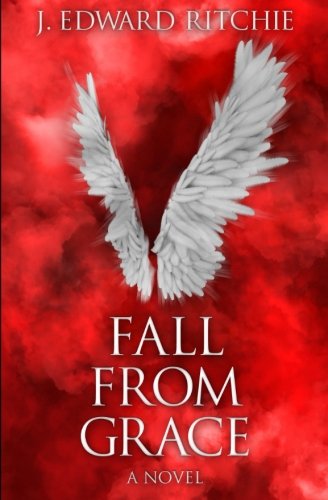
Fall from Grace by J. Edward Ritchie is a thrilling new take on the story of Lucifer and Michael; great angels in heaven and brothers who fall out when Lucifer rebels against heaven. We hear the story from both Michael and Lucifer's perspectives; alternating between the two of them, so we understand exactly what happened, and more importantly, the kind f relationship they had with each other, and how it changes over time.

Ritchie created a great new story around one that is very old, and makes the world of heaven and the angels really come to life like never before. Where you might expect something more other-worldly the background and lore of Ritchie's world was surprisingly relateable and very human. I felt fully immersed in this world, and sat on the edge of my seat for the last quarter of the book.

I had few issues with this book, overall being something very enjoyable and well worth the cost, however one thing that bugged me was the character of Satan, referred to as both Satanail and Satan. As someone who grew up catholic I know that Satan's angelic name was Lucifer (meaning light) and I was actually a little disappointed that this name wasn't used in the book, especially since the names of angels and other creatures was an important part of the story. Every other name for the creatures you met made sense, and Ritchie twisted their relationships skillfully. Regardless of your religious affinity I think there is something for everyone in this book.

To learn more about author J. Edward Ritchie click here.

To purchase "Fall from Grace" click here.

Wednesday, 23 January 2019

Review for "In the Eyes of Madness" by Michael Pang

In the Eyes of Madness (Declan Peters Chronicles Book 1) by [Pang, Michael]

Review for "In the Eyes of Madness" by Michael Pang

Where demons and teenage angst intersect, “In the Eyes of Madness” by Michael Pang shows what happens when teenagers discover the world of demons and those who fight them. This story centre's around Declan, a sweet natured and loving teen with a troubled past he is constantly trying to put behind him. With the help of his best friends he tries to keep it together, and help his aunt and uncle who raised him, but the memories of his mothers mental break keep coming back to haunt him. When he meets a mysterious new coworker at the hospital everything changes for him and his friends.


This book was a little slow to start, but after a little while ratchets up the intensity and the suspense, to my delight. Pang sets he scene really well by introducing us to the main characters and giving just enough information so we can start to form attachments and opinions on these characters, but still keeps something held back to allow for more natural reveals throughout the book that takes you by surprise. The flow was great, and as the book goes along you start to notice small thing that accumulate into some great twists and turns.

This is a short book however, and because of the slightly slow build at the beginning it feels pretty rushed at the end, and there is quite a lot of exposition crammed in to make sure it ends in some semblance of a solid conclusion. The author description does also say that Pang is a Christian, which you might have guessed from the book content in general, but I found it not quite too preachy as you might expect. I did like the book, and if you are looking for a well crafted quick story filled with teens, romance, heartbreak and the supernatural, this is the book for you.

To learn more about the author Michael Pang click here.

To purchase "In the Eyes of Madness" click here.

Tuesday, 15 January 2019

Review for "The Revelation Room" by Mark Tilbury


Review for "the Revelation Room" by Mark Tilbury

The Revelation room is part mystery, part action with a little romance thrown in for good measure. The story centres around a young man named Ben Whittle, mild mannered and soft spoken, who's father is a private detective. Ben is thrust out of his comfortable life in a small sleepy town in England when he receives a phone call from his father, clearly in distress, pleading for help. Now Ben has to rescue his father, while somehow getting over his crippling self doubt, with the help of his best friend and secret crush Maddie. Despite the odds, and a violent cult leader, Ben summons the courage he needs to save his father, and perhaps learn something about himself and his own strength along the way.


Well, what can I say about this book. The content requires some maturity to get through as things get quite dark at times, and it certainly is original from my perspective. We don't see this from the perspective of a talented private eye, but instead from their kid; decidedly NOT talented. So while the story I found compelling and original, the character of Ben Whittle was so annoying and frustrating it almost made me put the book down. He is the very definition of a wet rag; he constantly complains about how much he sucks at everything from cooking to walking, and he is terrified of literally everything. He convinces himself that his dad is already dead and he is just walking straight towards his own doom. I understand that the point of Ben being like this is that once he goes through the trial of saving his father he is supposed to find an inner strength, and transform himself to save the day, and I won't spoil it for you, but suffice it to say I was thoroughly underwhelmed by this character the entire time.

I have to give kudos to Tilbury though, I knew what he was going for and he nailed it. I would almost say it crafted this character too well, because I honestly would have punched him if I was with him. I will say I wish the ending was more satisfying, and that I saw more of a transformation with Ben, and saving that I just wish he got the nerve to tell Maddie the truth about his feelings. In the end however Ben goes back to being Ben, and perhaps that's more impressive than him changing, since he is able to experience the things he experienced and somehow keep himself together.

To learn more about the author Mark Tilbury click here

To purchase "The Revelation Room" click here.

Thursday, 20 December 2018

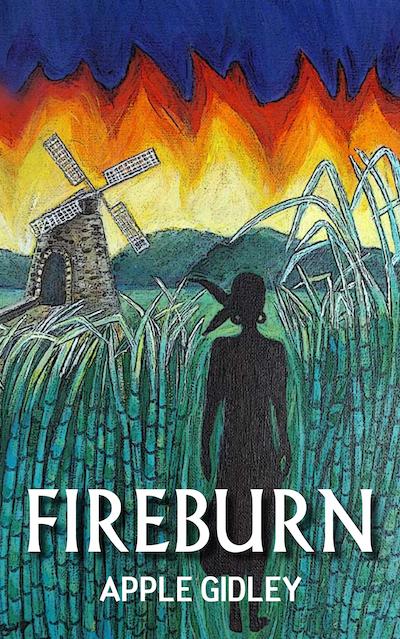
Interview with the author of "Fireburn" Apple Gidley

A great interview with Apple Gidley.
Check out Gidley's latest work, 'Fireburn'
in the links below


  • What is your favourite genre to write? Why?
Historical fiction marries two favourite subjects - English and history. I believe in order to understand the present and welcome the future we must know our past, the good and the bad.
Then it is fascinating to weave fact into fiction and make an enjoyable story for people to read and maybe learn a little something about a place or era about which they knew only a little.
  • What kinds of sources do you take inspiration from?
History, in that if a certain country or period interests me I want to learn more, and then the characters start appearing.
Events can trigger a book. That’s how Fireburn came into being. I attended the annual celebration of Transfer from Denmark to the US of the Danish West Indies in 1917 and the speeches got me wondering what it would have been like to live in what is now the US Virgin Islands back in the 1800's. Research lead me to an actual rebellion known as ‘Fireburn’ and so a book was born!
I am an inveterate eavesdropper and snippets of conversation, maybe on a plane or a train, can get my imagination running away with me. The number of innocent people sitting around me at an airport who have had dire circumstances written into their lives without knowing a thing about it is truly terrifying.
  • Do you model characters after real people?
No, not consciously. I think most of my characters are an amalgam of people met around the world and over the years.
  • What does you editing process look like? Do you allow others to read your writing?
I edit in entirely the wrong way, apparently. I edit as I write, then edit the previous day’s words again before starting to write each morning. Then I leave it alone until a full read through when I edit again. After that I send the MS out to a group of trusted readers and wait, in terror, until their comments start to come in. If I’m lucky they all say similar things. I have a mix of British and American, men and women readers so think I get a pretty good cross section. All are wonderfully gentle but very certain in their criticisms, for which I am truly grateful.
  • Do you take criticism hard or do you have a thick skin? Have you ever received criticisms that you felt were unjustified or too harsh? Are you your worst critic?
I take criticism pretty well. I certainly take editing well. A good editor makes a writer a better writer, and I am always learning. Everyone is entitled to their opinion and as writers I think we have to accept we can’t please everyone. I think it important to remember fiction is make believe! As long as the basic facts are correct - dates, places, real people if using them - then I think a little leeway should be granted.
  • Have you ever written something you didn’t like, but felt necessary for the overall story?
Yes. I have written some cruel bedroom scenes, and I’ve written dialogue that turned my stomach. I think as long as violence, crudity or ugly words are not gratuitous and move the story along, either in plot, pace or scene setting, then they are important.
Some of the dialogue in Fireburn is without doubt sexist and racist but it describes a time in history and so lends legitimacy to a period.
  • What would be your advice for aspiring authors?
Read, then write! And read and write some more.
For more information on author Apple Gidley, click here.
To purchase 'Fireburn' click here.

Thursday, 9 August 2018

Character Interview with Pierce Landcross from "Legacy: The Reunion" by Michelle E. Lowe

Our latest with Pierce Landcross from Michelle E. Lowe's work "Legacy: The Reunion"

Legacy: The Reunion by [Lowe, Michelle E.]


  • Tell us a little about yourself? Where do you come from? 
    • S’pose I ought to start with my name, eh? My name is Pierce Landcross. I’m twenty-seven and a bit mischievous. I’ve been told I’m a tad too inquisitive, which simply makes me the curious sort, I reckon. I am highly fascinated by all the gadgets and inventions coming about in this Industrial Age we live in. There seems to be something new every day. Where am I from? I know I was born in England, but not sure where exactly my birthplace is. You see, my folks were gypsies who wandered through country after country. As youngsters, my older brother, Joaquin, and I got separated from our folks when the troupe was run out of London while we were off exploring Abney Park Cemetery.
  • Tell us a little about your home, what are your feelings towards home?
    • Dunno what I can tell you about home, love, other than I’ve seen a lot of it. S’pose home is wherever I am at the moment, which depending on where THAT is does determine my thoughts on the place.
  • What motivates you along your journey? 
    • *Snorts* Staying alive, mostly. Being an outlaw thief with a high bounty on my head, I have little time to linger about in one place. If I’m idle for too long, I’m just asking for the noose! Aside from that, I’ve had many reasons to keep me going. A lost Toymaker needing to be found, searching for fortune, running from bloody authorities and all of that. There is always something waiting just around each corner I come to. It’s definitely kept me on my toes through and through. 
  • How do you see yourself/ how do you see yourself in relation to the rest of the world? 
    • How do I see myself? Huh. Reckon I see myself as an outcast. In regards to how I fit in with the rest of the world, s’pose I don’t, really. I’m simply a wanderer, breezing through life until an updraft hurls me up into some shite I have to deal with.
  • What is most important to you in this world? 
    • Aye, well, to be honest, love, it’s the people I care for. Not to sound like a bleedin’ sap, but it’s true. My brother and I spent years searching for our folks after we were separated from them, and ended up becoming common criminals along the way. I hold out hope I’ll come across the family someday, but only time will tell, eh?
  • What characteristics do you consider important in a person? What kind of people do you try to surround yourself with? 
    • After fleeing Germany for falling into a spot of trouble, I made my way to Paris where I met artists and writers. It was interesting enough, for I do enjoy a creative mind. Mainly, when I do join up with a group of people, they’re from all walks of life. I was arrested once and sentenced to penal colony on Norfolk Island and on the voyage there, the transporting ship I was held on was attacked by Sea Warriors. Do you know who they are? No? They’re Indian tribes who sail the Middle Passage of the Pacific, attacking slave ships anfreeing people who’d been kidnapped from their homeland.  They’ve been doing so for many years. Anyhow, these particular Sea Warriors, Captained by an Apache named Sea Wind, had mistaken the prison hulk for a slave ship and advanced on it. They were able to take over the vessel and ol’ Chief Sea Wind allowed me passage onboard his ship, Ekta. Aye, the Sea Warriors are a fine lot, they are. The chief and I became friends, but his wife, Waves of Strength, would slit my throat if given the chance. Why, you ask? I, erm . . . shoot her in the arse. By accident, mind you! But that’s a story for another day. At one time, I was smuggling goods for a cross-dresser thief named Juan Fáng, who eventually opened her own opium den in London. She’s a smart lass that one, and if you ever call her a man, no one would ever find your body. *Winks* Then there’s my best mate, Robert Blackbird, who was a thieving partner of mine. I don’t have much say in the people I come in contact with, I’ve been around all sorts, and most are people I could do without seeing again. However, there are those like the Sea Warriors, Fáng, and Robert who are loyal and trustworthily mates—for the most part—and for someone like me, living the dangerous lifestyle I do, a bit of loyalty goes a bloody long way. 
  • What do you see for yourself in the future? Where will you be? What kind of person do you want to become? 
    • My grandmother used to be a fortuneteller of sorts. She once told me each life has many paths that lead in different directions. No one can truly see into the future because the future is always changing. I dunno my whole story yet, but I can tell you it involves me traveling through the Netherlands and following clues to a family inheritance, dealing with the Hellfire Club in Scotland, sailing to Sonora, Mexico with the Sea Warriors where I’ll be hunting for fugitives, breaking Chief Sea Wind and his crew out of jail in New Orleans before returning to England to face my most feared enemy. What sort of person I do I want to be? Erm, a living one! I’d also like to escape to a tropical island somewhere. In short, I want to become free.
To Learn more about author Michelle E. Lowe click here.
To purchase "Legacy: The Reunion" click here.

Friday, 3 August 2018

Interview with author of "The Rain Never Came" Lachlan Walter

Read our latest interview with Lachlan Walter, author of "The Rain Never Came."

The Rain Never Came by [Walter, Lachlan]


What is your favourite genre to write? Why?
I’ve always written within speculative fiction: typically science fiction and post-apocalyptic fiction, with the odd detour.

Like many science fiction writers who grew up during the 1980s, I was a nerdy kid surrounded by a media landscape saturated with science fiction, and living through a point in time in which the genre’s terminology and motifs were being absorbed into our cultural language. To an enquiring mind that soaked up external stimuli like a sponge – especially one obsessed with books, giant monsters, Ghostbusters and Star Wars – science fiction seemed like the logical way to express and understand the influence of this changing world.

And then there’s science fiction’s ability to make us question what we know, by reframing it as a ‘what if?’ and then digging deep. To this particular fan, the ability of science fiction to open our eyes to what is by showing us what it might become, is nothing short of genius.

Do you model characters after real people?
I think I speak for many writers in saying that I don’t so much model my characters after real people, but rather appropriate aspects of real people and attribute them to my characters. This is certainly the case with The Rain Never Came – no single character is based on a real person, but the same can’t be said for some of their behaviours, mannerisms, figures-of-speech and peculiarities, not to mention some of the character interactions.

We’re fascinating creatures with individual habits and quirks that would seem odd, if not bizarre, to anyone but ourselves. And so, to make a character more human and alive, these habits and quirks need to shine through, even if only subtly. The trouble here is that making up a quirk or habit can seem ridiculous, even if only to ourselves – which can then have a knock-on effect on our confidence and flow.

This is why it’s okay to occasionally steal things from real life and give them to your characters – sometimes the truth really is stranger, more interesting and more convincing than fiction.

Have you ever written something you didn’t like, but felt necessary for the overall story?
Absolutely, as I think every writer has – there were many instances of this in The Rain Never Came, some of which anyone who has read it will recognise straightaway. But as unlikeable as these instances may be, they’re there for a reason: realism.

All writers should strive to make their stories as believable as possible, even if the events and locations therein are purely fictional or speculative. We should do our best to make them ‘real,’ especially their characters and their characters’ lives. And a large part of what makes our own lives ‘real’ are ups and downs – no life is perfectly balanced and as smooth as the proverbial, no matter the surface impression. Happiness and sadness, joy and depression, excitement and boredom, engagement and disenchantment; they are complimentary emotions that can only exist in contrast to each other.

Our stories should reflect this: good things should happen, and so should bad things. It goes without saying that we often tend to prefer writing the ‘good’ to the ‘bad’ – show me a serious writer who doesn’t invest a fair bit of emotion in their work, and I’ll show you a liar. And so it is with The Rain Never Came. Bad things happen in it, things that I didn’t particularly like writing, but they were necessary for both the story as a whole and as realistic balances to the good.

Do you take criticism hard or do you have a thick skin? Have you ever received criticisms that you felt were unjustified or too harsh? Are you your worst critic?
 So far, most of the feedback I’ve received on The Rain Never Came has been positive, or at least encouraging. I’m ready for anything negative, though – quality is in the eye of the beholder, as some people say, and no piece of art, be it a book or a song or a movie or an actual piece of art art, is ever perfect. And nor should it be.

Luckily, I’ve got pretty thick skin. And it helps that I’m hard on myself, and push through a lot of redrafting and rewriting before showing my work around for an initial round of feedback – I don’t want someone to judge my work if it’s full of logical flaws, continuity problems, grammatical mistakes, plot holes and so on. That way, each piece is as polished as that point in time dictates, and so the feedback received is on the major elements instead of the minor.

How do you keep motivated to finish a writing project?
For me, the simple answer is to have another project to look forward to when I’m done. I believe that most writers have more ideas than they know what to do with – if we can harness that, and stay sharp enough to use these ideas as blueprints for future projects while still dedicating our passion to the project in front of us, then there’s always something to look forward to. Anticipation and delayed gratification: there’s sometimes no better motivator. 
 
What would be your advice for aspiring authors?
There’s as much advice for aspiring authors out there as there are aspiring authors, but I’ll share a way of thinking that works for me. Writing a good book only takes a few things: a spark of talent that can be nurtured, an idea that can become a story, and discipline and routine, as well as a lot of time and a job that allows you that.

Find these things, and you’ll get there. 

To learn more about author Lachlan Walter click here.
To purchase "The Rain Never Came" click here.
Wednesday, 1 August 2018

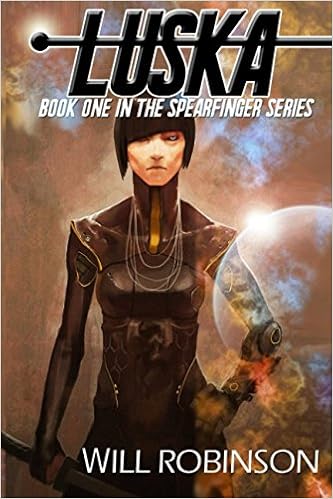
Interview with the author of "Luska" Will Robinson

Check out our interview with Will Robinson, author of "Luska"


What inspired you to start writing?
I was inspired to write by my psychologist. By the time I was 22 both my parents had died of cancer and my best friend had been killed in a car accident. Although I initially banished any emotion to the deepest, darkest hole of my psyche and went one with my life like a good southern man-boy, I slowly started to fall apart. I was really at my wit’s end when I found my psychologist, a real hard-ass Israeli woman who got me to finally examine the uncurated emotional memories  of my youth. I used to be an avid drawer and painter, but I had allowed the creative part of my brain to be cut off and almost wither away. She suggested I write something. That something eventually became my first novel, The Fiery Salamander.

When did you complete your first piece of writing? What was it? How was that process?
I completed my first piece of writing  (first draft at least) in maybe 2009. I was a stay at home dad at the time, so I had moments of freedom to work on it if my son was asleep or preoccupied. The book is called The Fiery Salamander, a YA historical fiction novel set at the end of French and Indian War  (which should finally be out in early 2018). I had to do a lot of research for that book, but I was familiar with the colonial period through my archaeological studies and work on sites from the period.  That got me into the habit of writing. Habit is the key. It has to be such an innate part of your schedule that if you don’t do it, you feel bad.

What kinds of sources do you take inspiration from?
My family and friends are a great source of inspiration. I also consume a lot of anthropology, history, general science, cognitive psychology, and (of course) fiction which inspires my work. But also travel; I went to Ireland recently, which is the setting of the fantasy novel that I am working on at present. Authors and thinkers that inspire me are Geraldine Brooks, Hilary Mantel, Vernor Vinge, Nicola Griffin, Kim Stanley Robinson, Neal Stephenson, Frank Herbert, Ann Leckie, Isaac Asimov, Napoleon Chagnon, Steven Pinker, Robert Sapolsky, and many more. My sci fi novel, Luska, has anthropological themes, but it is an amalgamation of inspiration from many of the authors and people I have read and interacted with all my life.

Do you model characters after real people?
Usually not actively, but passively. Eidi, one of the main characters in Luska, has what she calls “spells” where she sees into possible futures. It is certainly based on my experience of having anxiety attacks. Her heart races and has a feeling that she is going to die, which is the way I would feel when I used to have them ten years ago. It was only after wiring the first version of the scene did I realize that Eidi was actually having an anxiety attack (I, unfortunately, can’t see the future ).  Also, her grandfather is loosely based on my Korean father-in-law and his experiences of growing under Japanese rule in Pyongyang. But this only goes so far-- my father in law was not evil, just a little grumpy.

How do you keep motivated to finish a writing project?
A key to how I have been able to keep motivated is to keep a specific time to write. I am a morning lark (as opposed to a night owl). I have always been my sharpest early in the morning and that is when I write. Just having that time during the small hours when no one is awake, keeps me free from distractions and my eyes on the prize. If a problem arises in the story that I can’t write through, I will stop and do something else, like take a walk. Sometimes, if I am lucky, my brain will figure out a solution. Now I say this, but it  is not always true, for I am a fallible human and I also like to play computer games. So if that becomes a distraction at home, I go to a coffee shop, put on headphones and retreat into my little shell while gulping coffee and forming brain fruit, also called ideas.

To learn more about the author Will Robinson click here.
To purchase "Luska" click here.