Showing posts with label Author Interview. Show all posts

Thursday, 20 December 2018

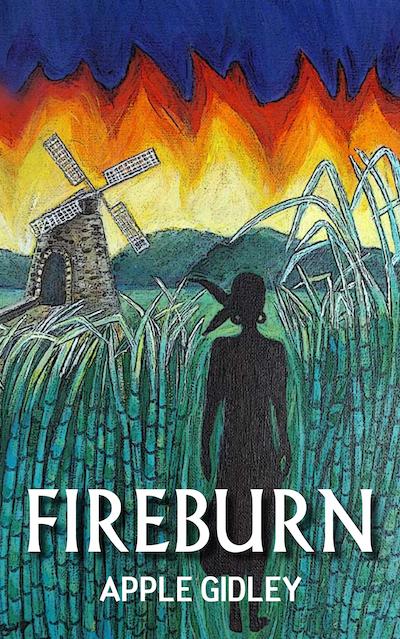
Interview with the author of "Fireburn" Apple Gidley

A great interview with Apple Gidley.
Check out Gidley's latest work, 'Fireburn'
in the links below


  • What is your favourite genre to write? Why?
Historical fiction marries two favourite subjects - English and history. I believe in order to understand the present and welcome the future we must know our past, the good and the bad.
Then it is fascinating to weave fact into fiction and make an enjoyable story for people to read and maybe learn a little something about a place or era about which they knew only a little.
  • What kinds of sources do you take inspiration from?
History, in that if a certain country or period interests me I want to learn more, and then the characters start appearing.
Events can trigger a book. That’s how Fireburn came into being. I attended the annual celebration of Transfer from Denmark to the US of the Danish West Indies in 1917 and the speeches got me wondering what it would have been like to live in what is now the US Virgin Islands back in the 1800's. Research lead me to an actual rebellion known as ‘Fireburn’ and so a book was born!
I am an inveterate eavesdropper and snippets of conversation, maybe on a plane or a train, can get my imagination running away with me. The number of innocent people sitting around me at an airport who have had dire circumstances written into their lives without knowing a thing about it is truly terrifying.
  • Do you model characters after real people?
No, not consciously. I think most of my characters are an amalgam of people met around the world and over the years.
  • What does you editing process look like? Do you allow others to read your writing?
I edit in entirely the wrong way, apparently. I edit as I write, then edit the previous day’s words again before starting to write each morning. Then I leave it alone until a full read through when I edit again. After that I send the MS out to a group of trusted readers and wait, in terror, until their comments start to come in. If I’m lucky they all say similar things. I have a mix of British and American, men and women readers so think I get a pretty good cross section. All are wonderfully gentle but very certain in their criticisms, for which I am truly grateful.
  • Do you take criticism hard or do you have a thick skin? Have you ever received criticisms that you felt were unjustified or too harsh? Are you your worst critic?
I take criticism pretty well. I certainly take editing well. A good editor makes a writer a better writer, and I am always learning. Everyone is entitled to their opinion and as writers I think we have to accept we can’t please everyone. I think it important to remember fiction is make believe! As long as the basic facts are correct - dates, places, real people if using them - then I think a little leeway should be granted.
  • Have you ever written something you didn’t like, but felt necessary for the overall story?
Yes. I have written some cruel bedroom scenes, and I’ve written dialogue that turned my stomach. I think as long as violence, crudity or ugly words are not gratuitous and move the story along, either in plot, pace or scene setting, then they are important.
Some of the dialogue in Fireburn is without doubt sexist and racist but it describes a time in history and so lends legitimacy to a period.
  • What would be your advice for aspiring authors?
Read, then write! And read and write some more.
For more information on author Apple Gidley, click here.
To purchase 'Fireburn' click here.

Friday, 3 August 2018

Interview with author of "The Rain Never Came" Lachlan Walter

Read our latest interview with Lachlan Walter, author of "The Rain Never Came."

The Rain Never Came by [Walter, Lachlan]


What is your favourite genre to write? Why?
I’ve always written within speculative fiction: typically science fiction and post-apocalyptic fiction, with the odd detour.

Like many science fiction writers who grew up during the 1980s, I was a nerdy kid surrounded by a media landscape saturated with science fiction, and living through a point in time in which the genre’s terminology and motifs were being absorbed into our cultural language. To an enquiring mind that soaked up external stimuli like a sponge – especially one obsessed with books, giant monsters, Ghostbusters and Star Wars – science fiction seemed like the logical way to express and understand the influence of this changing world.

And then there’s science fiction’s ability to make us question what we know, by reframing it as a ‘what if?’ and then digging deep. To this particular fan, the ability of science fiction to open our eyes to what is by showing us what it might become, is nothing short of genius.

Do you model characters after real people?
I think I speak for many writers in saying that I don’t so much model my characters after real people, but rather appropriate aspects of real people and attribute them to my characters. This is certainly the case with The Rain Never Came – no single character is based on a real person, but the same can’t be said for some of their behaviours, mannerisms, figures-of-speech and peculiarities, not to mention some of the character interactions.

We’re fascinating creatures with individual habits and quirks that would seem odd, if not bizarre, to anyone but ourselves. And so, to make a character more human and alive, these habits and quirks need to shine through, even if only subtly. The trouble here is that making up a quirk or habit can seem ridiculous, even if only to ourselves – which can then have a knock-on effect on our confidence and flow.

This is why it’s okay to occasionally steal things from real life and give them to your characters – sometimes the truth really is stranger, more interesting and more convincing than fiction.

Have you ever written something you didn’t like, but felt necessary for the overall story?
Absolutely, as I think every writer has – there were many instances of this in The Rain Never Came, some of which anyone who has read it will recognise straightaway. But as unlikeable as these instances may be, they’re there for a reason: realism.

All writers should strive to make their stories as believable as possible, even if the events and locations therein are purely fictional or speculative. We should do our best to make them ‘real,’ especially their characters and their characters’ lives. And a large part of what makes our own lives ‘real’ are ups and downs – no life is perfectly balanced and as smooth as the proverbial, no matter the surface impression. Happiness and sadness, joy and depression, excitement and boredom, engagement and disenchantment; they are complimentary emotions that can only exist in contrast to each other.

Our stories should reflect this: good things should happen, and so should bad things. It goes without saying that we often tend to prefer writing the ‘good’ to the ‘bad’ – show me a serious writer who doesn’t invest a fair bit of emotion in their work, and I’ll show you a liar. And so it is with The Rain Never Came. Bad things happen in it, things that I didn’t particularly like writing, but they were necessary for both the story as a whole and as realistic balances to the good.

Do you take criticism hard or do you have a thick skin? Have you ever received criticisms that you felt were unjustified or too harsh? Are you your worst critic?
 So far, most of the feedback I’ve received on The Rain Never Came has been positive, or at least encouraging. I’m ready for anything negative, though – quality is in the eye of the beholder, as some people say, and no piece of art, be it a book or a song or a movie or an actual piece of art art, is ever perfect. And nor should it be.

Luckily, I’ve got pretty thick skin. And it helps that I’m hard on myself, and push through a lot of redrafting and rewriting before showing my work around for an initial round of feedback – I don’t want someone to judge my work if it’s full of logical flaws, continuity problems, grammatical mistakes, plot holes and so on. That way, each piece is as polished as that point in time dictates, and so the feedback received is on the major elements instead of the minor.

How do you keep motivated to finish a writing project?
For me, the simple answer is to have another project to look forward to when I’m done. I believe that most writers have more ideas than they know what to do with – if we can harness that, and stay sharp enough to use these ideas as blueprints for future projects while still dedicating our passion to the project in front of us, then there’s always something to look forward to. Anticipation and delayed gratification: there’s sometimes no better motivator. 
 
What would be your advice for aspiring authors?
There’s as much advice for aspiring authors out there as there are aspiring authors, but I’ll share a way of thinking that works for me. Writing a good book only takes a few things: a spark of talent that can be nurtured, an idea that can become a story, and discipline and routine, as well as a lot of time and a job that allows you that.

Find these things, and you’ll get there. 

To learn more about author Lachlan Walter click here.
To purchase "The Rain Never Came" click here.

Wednesday, 1 August 2018

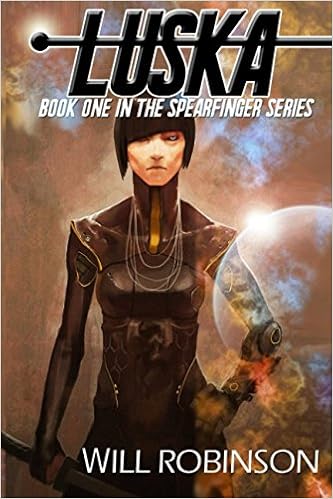
Interview with the author of "Luska" Will Robinson

Check out our interview with Will Robinson, author of "Luska"


What inspired you to start writing?
I was inspired to write by my psychologist. By the time I was 22 both my parents had died of cancer and my best friend had been killed in a car accident. Although I initially banished any emotion to the deepest, darkest hole of my psyche and went one with my life like a good southern man-boy, I slowly started to fall apart. I was really at my wit’s end when I found my psychologist, a real hard-ass Israeli woman who got me to finally examine the uncurated emotional memories  of my youth. I used to be an avid drawer and painter, but I had allowed the creative part of my brain to be cut off and almost wither away. She suggested I write something. That something eventually became my first novel, The Fiery Salamander.

When did you complete your first piece of writing? What was it? How was that process?
I completed my first piece of writing  (first draft at least) in maybe 2009. I was a stay at home dad at the time, so I had moments of freedom to work on it if my son was asleep or preoccupied. The book is called The Fiery Salamander, a YA historical fiction novel set at the end of French and Indian War  (which should finally be out in early 2018). I had to do a lot of research for that book, but I was familiar with the colonial period through my archaeological studies and work on sites from the period.  That got me into the habit of writing. Habit is the key. It has to be such an innate part of your schedule that if you don’t do it, you feel bad.

What kinds of sources do you take inspiration from?
My family and friends are a great source of inspiration. I also consume a lot of anthropology, history, general science, cognitive psychology, and (of course) fiction which inspires my work. But also travel; I went to Ireland recently, which is the setting of the fantasy novel that I am working on at present. Authors and thinkers that inspire me are Geraldine Brooks, Hilary Mantel, Vernor Vinge, Nicola Griffin, Kim Stanley Robinson, Neal Stephenson, Frank Herbert, Ann Leckie, Isaac Asimov, Napoleon Chagnon, Steven Pinker, Robert Sapolsky, and many more. My sci fi novel, Luska, has anthropological themes, but it is an amalgamation of inspiration from many of the authors and people I have read and interacted with all my life.

Do you model characters after real people?
Usually not actively, but passively. Eidi, one of the main characters in Luska, has what she calls “spells” where she sees into possible futures. It is certainly based on my experience of having anxiety attacks. Her heart races and has a feeling that she is going to die, which is the way I would feel when I used to have them ten years ago. It was only after wiring the first version of the scene did I realize that Eidi was actually having an anxiety attack (I, unfortunately, can’t see the future ).  Also, her grandfather is loosely based on my Korean father-in-law and his experiences of growing under Japanese rule in Pyongyang. But this only goes so far-- my father in law was not evil, just a little grumpy.

How do you keep motivated to finish a writing project?
A key to how I have been able to keep motivated is to keep a specific time to write. I am a morning lark (as opposed to a night owl). I have always been my sharpest early in the morning and that is when I write. Just having that time during the small hours when no one is awake, keeps me free from distractions and my eyes on the prize. If a problem arises in the story that I can’t write through, I will stop and do something else, like take a walk. Sometimes, if I am lucky, my brain will figure out a solution. Now I say this, but it  is not always true, for I am a fallible human and I also like to play computer games. So if that becomes a distraction at home, I go to a coffee shop, put on headphones and retreat into my little shell while gulping coffee and forming brain fruit, also called ideas.

To learn more about the author Will Robinson click here.
To purchase "Luska" click here.

Thursday, 26 July 2018

Interview with the author of "Legacy: The Reunion" Michelle E. Lowe

Here is our interview with Michelle E. Lowe, author of "Legacy: The Reunion."

Legacy: The Reunion by [Lowe, Michelle E.]


  • What is your favourite genre to write? Why?
    • Generally, I write fiction, and recently I’ve ventured into steampunk. It’s a fun genre to go into and it takes a lot of imagination to succeed at it, too. With fiction, a writer can play around with facts, or discard them completely and create a parallel world. The limit to what can be created is zero, and the imaginative ways to explain how made up things function takes some creative intelligence. You really work your brain coming up with how everything works and make it believable no matter how unbelievable it is!
  • Do you model characters after real people?
    • Mostly my characters come from my own imagination. There might be some traits of actual people in a few, but all in all, they’re compete creations of my own doing. These characters of mine usual start out as complete strangers to me, too. I’m too lazy to write out character profiles, documenting what they look like, their habits and such. I just write them. A lot of times, even with the protagonists, I have no idea who these individuals are. They’re almost like real people that you have to get to know through the course of time. The more I write about them, the more I understand the kinds of people they truly are.
  •  Have you ever felt like quitting writing? If so how did you overcome those feelings?
    • Every writer contemplates and/or has given up on writing for a time throughout their career. Myself included. Writers are fragile beings who rely on the approval of our readers. We’ve all gone through the phases of telling ourselves that we’re not good at this writing stuff and that we’re only kidding ourselves, especially when we get a rejection letter from a publisher or agent. For me, it wasn’t a one or two-star review, or negative criticism about any of my novels, for I have learned from them, believe it or not, and worked to improve my skills as a storyteller. No, the things that have gotten me to almost throw in the towel have been two things. One, (and it’s going to sound petty) but lack of sales. Yip. I know some will say storytelling isn’t about making money, but let’s face it, it’s THE DREAM to be paid doing what you love, right?. Making decent revenue so I can focus more on writing and actually build a career isn’t a selfish goal, and it would be fulfilling to know that my stories are something others enjoy. But now I’ve dug in my heels a bit deeper and promoting more and more, working on building a fan base, which is how success begins.
      The second reason I’ve thought about putting down the pen is the nothingness. Countless times I’ve given a copy of my book to people who promise to review it and then hear nothing back. At least with a poor review or rating, a writer at least knows what the reader thought. It’s the NOT knowing whether or not the reader likes it that kills us because we just assume they didn’t like it, but we’ll never know why. And it happens more often than not. As I mentioned before, we rely on the support of the people who read our work, so what gets me through those rough patches is a reader saying he or she actually liked my writing style and enjoyed the story. When I get a great review, it really does perk up my day because those good reviews are telling me that I might actually be doing something right with this writing thing. 
  • Do you have favourite characters from your own writing? What made them so special to you?
    • Yes! And one of them is Pierce Landcross. He is the protagonist of my fantasy/steampunk series, Legacy. When I decided to write this series, I wanted to not only thread together entertaining adventure stories, but I also wanted to fill them with fun and unique characters. So I came up with a lead character that’s intelligent, charming, clever, and yet a bit of hick. Readers have taken a shine to Pierce, too, which thrills me to no end.  
  • What would be your advice for aspiring authors?
    • I once read that you can make anything by writing. And it’s true! Writing opens up the mind, introduces new perspectives and brings people into worlds they never knew existed before. Writing is an art form that is beautiful, tragic, complex, stunning and horrifying. My best advice is to develop thick skin, learn from constructive criticism and read! Read! Read! Read! Because when a writer is reading, it’s different from non-writers. We’re not just reading, we’re studying. We’re finding out new ways to describe things, broadening our vocabulary, and learning how these other authors thread their stories together. Whatever genre you write, reading will help significantly when you put your own pen to paper.
  • Is there anything you wish you knew before you became an author?
    • I do wish I understood beforehand just how hard it would be. Sorry to break it to you aspiring writers. Seriously, writing is hard work and becoming a successful writer is even harder still. If anyone thinks otherwise they’re out of their minds! I was nineteen when I began this journey to be a writer and author. I even dropped out of college to pour all my time and effort into it. I’ve spent years studying how to write, went through an online workshop class, and learned from my mistakes along the way. Honestly, I can see how people turn into full-blown alcoholics trying to do this stuff and achieve at it! And after twenty years of sinking so much of myself into my passion for writing, I’m still climbing that ladder of trying to get noticed, trying to get my work and name out there above the thousands of writers just like me. It’s tough, really tough, and it can cause a mental breakdown. Even so, would I give up telling my stories? Nah!
To Learn more about author Michelle E. Lowe click here.
To purchase "Legacy: The Reunion" click here.

Friday, 17 November 2017

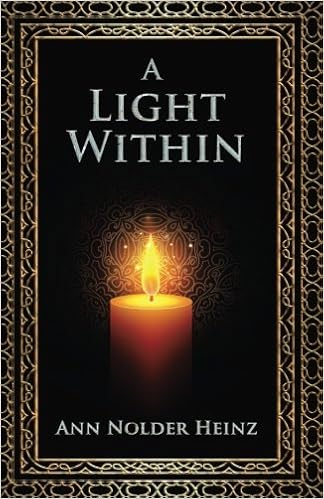
Interview with author of "A Light Within" Ann Nolder Heinz

On Writing caught up with author Ann Nolder Heinz to talk a little bit about what writing means to her.


What inspired you to start writing?   
I grew up in Waterloo, Iowa, where life flowed as deep and tranquil as the Cedar River that divided east from west and the neighborhoods were safe for children to play outside until after dark. I was fortunate enough to be born into a family where books were collected and revered. My earliest memories are of the sublime pleasure to be had from reading, first cuddled next to my grandmother in her big stuffed rocking chair as she read the children’s classics aloud, then curled up on my own as I graduated from story collections and Little Golden Books to Nancy Drew and the Hardy Boys and finally to the contemporary and classic novels in my mother’s library. I was already a lifelong book junkie, the first step on the road to becoming a writer.

I discovered the allure of writing in the fourth grade. I was blessed with teachers who encouraged creativity in their students and required us to write several stories every year. 
I enjoyed the process so much that I soon began writing stories for my own pleasure. I confess that in the early days I was better at conceiving and starting a story than I was at following it through to conclusion, as is proven by the numerous “Chapter 1’s” in the box of my juvenile writing stored in our attic. But the appeal was irresistible, and it found me again as an adult. Rather than a conscious choice, it was an itch I had to scratch regardless of whether the end result were judged as a success or failure by others. As it happened, I experienced much more of the latter than the former through the years, but I discovered that to feel truly happy and complete, I must soldier on.

What does your writing process look like?
Desire was just the catalyst for my writing career. Learning and perfecting the skill necessary to produce a publishable manuscript required years of hard work. Through trial and error, I have developed a process that involves three phases: concept and planning, first draft, and editing and polishing. Once I have settled on an overarching idea for a book, I begin fleshing it out with the main characters. I give each one physical and emotional attributes and backgrounds that are interesting and fraught with possibilities for conflict. I do whatever initial research is necessary. When my internal instincts tell me it is time to move past the theoretical, I begin writing. I allow my characters to determine the scope and direction of the plot, adding in minor characters and subplots as they occur to me. When all threads have been tied up in a satisfying conclusion, I move on to the difficult task of being my own worst critic. I pore over the writing with the goal of tightening the prose until it is crisp yet effective, looking for redundancies, awkward phrasing, loquaciousness, overuse of “telling” rather than “showing,” and anything else that interferes with the readers’ willingness to suspend disbelief and immerse themselves in the story.

This process is very much like riding a virtual rollercoaster. Conceiving an idea and carrying it through into the book’s initial chapters provides an emotional high that is impossible to describe. There comes a time in every manuscript, however, when my momentum slows and I must grind out the progression of the plot. This is the work’s most vulnerable time, and I must call on sheer determination and persistence to continue on. Excitement returns when the final climax and denouement are clear to me, and I often cannot write fast enough to get it all down. This energy carries me into the editing phase, and I am usually able to sustain a steady pace through several read-throughs until I am satisfied the manuscript is as good as I can make it. Although the process is grueling, I can say without hesitation that I never fail to find joy and immense satisfaction when I finally make it to those final words: The End.

What is your favorite genre and why?
I began writing what I most like to read: mystery and psychological suspense. I wrote in these two genres for many years, my last four novels being set in the delightful little river town where I live. A few years ago, a fortuitous happenstance pulled me away from this genre and into historical fiction. I participated in a tour of Underground Railroad sites in the small town of Jacksonville, Illinois and was deeply impacted by the narrative of our guide, a young black journalist who had made a study of this subject. By the end of the day, I had conceived the idea for a novel about the Underground Railroad entitled Last Stop Freedom with two female protagonists, one a black slave, the other a white woman oppressed by the men in her life. Thus began a writing adventure such as I had never experienced.

I discovered that much has been written about the Civil War but very little about the decade preceding it when the seeds of that horrific war were planted and grew. It was a period of time vital to fulfilling the values and ideals set forth by our founding fathers but left only half realized by them. My research took me into every facet of mid-nineteenth century American life: social, political, religious, and economic. I ended up writing three books spanning this period, each one taking a minor female character from the previous book and developing her story in a different direction. All three spotlighted the themes of oppression, rebellion and the freedom to determine one’s own destiny.

Do you model characters after real people? Do you have favorite characters?
The role of a character is to advance the storyline. If a character is modeled on a real person, the plot must fit that character rather than the other way around, which raises boundaries that restrict the scope of the story. On the other hand, creating characters out of the author’s imagination gives him or her delicious power. I am able to give my protagonists qualities that make them the women I would like to be or the men I would most like to befriend or love. Likewise, my antagonists can be every bit as conflicted and wrong-headed as most flawed human beings are. Then I have the ability to manipulate events so the outcome reflects my ideal world. Great fun!

That is not to say that real people cannot play a part in a story, particularly one set in a historical context. But that person’s presence in the story must coincide with the overarching reach of the plot. It is also important to adhere to historical truth. Using a historical character incorrectly will only interfere with the readers’ ability to fully immerse themselves in the story.

As for my favorite characters, I truly enjoy them all and am always sad to leave them when the story is done. That being said, Julia and Fanny from Last Stop Freedom are far and away my most beloved. Julia has the gift of faith and the tenderhearted capacity to love unconditionally. Fanny has the stoic wisdom to accept what she cannot change and the courage to risk everything to find a better life. I admire them both.

What would be your advice for aspiring authors?
WRITE BECAUSE YOU CAN’T NOT WRITE.

It is that simple. For me, the lure of writing is an itch I have to scratch regardless of whether the end result is judged as success or failure by others. I have experienced much more of the latter than the former through the years, but I discovered long ago that in order to feel happy and complete, I must soldier on.

That said, I acknowledge it is not always easy. For me, the most challenging aspect is managing the emotional fluctuations I experience when I write. The highs come when an idea is blossoming and the plot path forward is clear. The lows come when the writing does not flow and I am uncertain of the mission I have set for myself. The trick is to keep working regardless. Then there is the dreaded “writer’s block,” which is a common malady from which I am not immune. My cure is to place myself in a situation of total relaxation in order to allow my subconscious to work on the problem and come up with a solution. My favorite setting is a deep hot bath. Another big hurdle is managing the rejection letters once the work is complete. Nothing is more depressing for a writer than receiving this kind of news ─ and I have received more of it than I care to remember. My policy has always been to permit myself to mourn for a short time then force myself back to work. Recovery is easiest when there is a new project in the pipeline.


Bottom line, get to it. Decide on a project, let the words flow, then dissect and analyze what you have written. Take a class, join a writers’ group, read any advice you can get your hands on. My own contribution is a set of writing tips on my website www.fictionbookmates.com. Regardless, the best idea in the world is useless until it is communicated to others. So write it! You will never regret that decision.

To learn more about the author click here.

To purchase "A Light Within" click here.

Saturday, 11 November 2017

Interview with the author of "Dambuster" Susan Ottaway

On Writing had the chance to talk with author Susan Ottaway 

Dambuster: The Life of Guy Gibson VC by [Ottaway, Susan]


What inspired you to start writing?
We always had lots of books in our family home and were encouraged to read. I was fascinated with those about the Second World War and read many belonging to my father, one of which was called Enemy Coast Ahead and was by a young pilot called Guy Gibson. It told of his time in the Royal Air Force, the raids in which he took part and the people he met. I really enjoyed it and he became my childhood hero. I was distraught when I discovered that he had been killed returning from a raid over Germany just a month after his twenty-sixth birthday. When I searched for more information about him I discovered that, apart from his role as leader of what became known as the Dambusters’ Raid, there was very little to be found. Eventually I gave up looking but many years later decided that I would research and write a book about him myself.

What is your favourite genre to write? Why?
I only write non-fiction books and my favourite subjects are twentieth-century history and aviation. I think these were my favourites because I grew up hearing stories about the two world wars from my grandparents and parents and because my father was an aircraft engineer. I worked for airlines for twenty years and have never lost my love of aviation.  I am now concentrating on telling the stories of some of the agents of the Special Operations Executive during the Second World War.

What does your writing process look like? Did it take you a while to develop?
When I first started writing I really had no idea how to go about it. I had already signed a contract with a publisher before a single word had been written. His confidence in me came from the enthusiasm I had for the subject but, more importantly, from the support I had received from aviation author, Chaz Bowyer, who had also been published by the same company. I remember lying awake at night full of anxiety about my ability to write at all and for several weeks after receiving the contract still hadn’t managed to get a single word on paper. Then, in the middle of one of these sleepless nights, I thought of an opening sentence, leapt out of bed and typed it on my ancient computer. Even though those first few words were eventually discarded, they helped me to get the book started. For the past few years, I have had a brilliant agent, Andrew Lownie, who makes me write proper proposals which I usually have to revise several times before he is satisfied.  Although they require a lot of work to get right, they make the actual writing process so much easier.

Do you take criticism hard or do you have a thick skin? Have you ever received criticisms that you felt were unjustified or too harsh? Are you your worst critic?
Many of the subjects about which I write have had their official records closed until recently and some people aren’t willing to have their long-held beliefs about a person or event dispelled by my work. This sort of criticism used to bother me but now it doesn’t, because I always research my subjects thoroughly and, wherever possible, check facts from more than one source so, if people don’t want to believe the truth, there is not a lot I can do about it.  I have been fortunate to have received more good reviews than bad and understand that ‘you can’t please all the people all of the time’ so am not too upset if a few people don’t like what I have written.

How do you keep motivated to finish a writing project?
Knowing the date that the typescript has to be with the publisher usually keeps me quite focused.
If I find it impossible to write anything worth reading on a particular day, I go and do something else and usually find that I’m back on track the following day. It helps to have written a proposal at the start because it shows the direction I want the book to go. The first half of the book is the most worrying time as there is still so much to do but I’m always surprised how the second half just seems to fall into place.

What do you wish people knew about life as an author?

It’s hard work, the hours can be very long, it can be quite lonely and very few authors earn a fortune for their efforts. It’s also difficult to have a satisfactory social life when you have tight deadlines.  On the other hand, when all the work is finished and you see your book in print for the first time, it is magic. 

To learn more about Susan Ottaway, click here

To purchase "Dambbuster; The Life of Guy Gibson VC" click here


Saturday, 4 November 2017

Interview with author of "Spellcaster" George Bachman

On Writing had the chance to interview author George Bachman about his writing process and all the things that go along with writing a book like Spellcaster

Spellcaster by [Bachman, George]


In a turn-of-the century England steeped in steampunk and magic, Christine learns her life-threatening illness stems from her paranormal visions. During the London Season, Allie, her beloved sister and the family heir, seeks a noble match while she searches the occult underground for answers. But the only witch who can help will not do so unless Allie marries her beau, an impoverished aristocrat, so that the illicit pair can share Allie's wealth.

What inspired you to start writing?
-                All the books I’ve read since I could read. I wanted to do what my heroes do, and my heroes       have always been writers.

When did you complete your first piece of writing? What was it? How was that process?
-                Grade school. It was supposed to be an essay assignment on Moses and the burning bush,           but somehow it ended up being a very florid retelling of that story. Fortunately, my teacher         liked it and gave it a high mark, though he warned me to stick to the brief next time.

What is your favourite genre to write? Why?
-               Fantasy. It has the fewest rules and encompasses everything from M.R. James restrained            stories and Peake’s Dickensian fantastique to David Lindsay’s total immersion in a world            completely of his own invention.

      What kinds of sources do you take inspiration from?
-               Nonfiction seems to send me off into flights of fancy, oddly enough. Music does the same.            And fiction of every genre. A recent trip to the Cloisters set off a dozen story ideas in my            head. It might be easier to enumerate the things that don’t inspire me.

Do you model characters after real people?
-               Never. This or that person’s traits may find their way in, but never whole persons.

What does your writing process look like? Did it take you a while to develop?
-               It took a while for me to not overthink it, but otherwise the process emerged right away. My      next story bubbles up over the others, and that is the same as my increasing desire to do it.          Just two different ways to say the same thing. Once it does, it starts to organize itself into an      outline I eventually write down when it’s settled down a bit. Each subsequent draft of the            outline yields greater detail until it eventually becomes the text itself, which I refine the way        you would do any manuscript draft, until it is done.

What does you editing process look like? Do you allow others to read your writing?
-              Editing is simply the last process of refinement, getting out the dross until I can read a story        all the way through with pleasure. My only external editors weed out any stray punctuation        and spelling anomalies that slipped through even this final filtering.

Do you take criticism hard or do you have a thick skin? Have you ever received criticisms that you felt were unjustified or too harsh? Are you your worst critic?
-               If the criticism convinces me of something I’ve overlooked and the critic is in sympathy with      a story’s basic aim, then no, I never take it hard, though I may feel a bit embarrassed at not        catching the flaw myself. If a critique chastises the story for not being something it isn’t              meant to be, the words simply roll off my duck’s back. I am at once my own harshest and            most sympathetic critic.

Have you ever felt like quitting writing? If so how did you overcome those feelings?
-               No, never.

Do you have favourite characters from your own writing? What made them so special to you?
-               Christine from Spellcaster amazes me with her warmth, determination, occult book                      knowledge, and self-effacement.

How do you keep motivated to finish a writing project?
-               Anticipating my own satisfaction is usually enough, and the hope of a reader, any reader out      there, whom a story may touch in solitude.

Have you ever written something you didn’t like, but felt necessary for the overall story?
-                No any element that doesn’t give me as much pleasure as the whole does not make the final        cut.

Is there any question you are tired of getting as an author?
-                I haven’t gotten enough of them yet to get tired of any one.

What do you wish people knew about life as an author?
-                I would rather they focus on the stories and regard me as invisible.

What would be your advice for aspiring authors?
-               Read, write, read, read, read, write

Is there anything you wish you knew before you became an author?

-                I’m still finding that out.


    To learn more about the author click here

    To purchase the book click here.


Wednesday, 1 November 2017

Interview with author of "Grains of Truth" Elizabeth Ferry-Perata

On Writing had the pleasure of interviewing Elizabeth Ferry-Perata about her experiences writing

Grains of Truth: Bonds of friendship cannot be broken by [Ferry-Perata, Elizabeth]


What are the lies we tell ourselves to stay sane?

In the world of a Texas feed store, the line between reality and truth blurs when love and friendship are at stake. Meet Sarah and Zoe, two best friends who work in a family-owned feed store. Their lives begin to unravel when love sparks between Sarah and the feed store owner’s only heir, Tom. Patriarch Otis quickly makes it known that his only son’s future won’t include the feed store “girl”. The clash over Tom’s love life erupts in a family feud where business is expected to trump love. In the meantime, a romance also ignites between Zoe and the local town physician whom she nicknames “Dr. Sex on Two Legs”. The women are quickly caught up in a family feud that leads to unexpected consequences, loss and tragedy.

Grains of Truth is an intense, emotional and passion-filled story about two best friends looking for that one thing everyone wants — love. It’s a story about friendship and accepting what you can’t change. Grains of Truth will move you to tears and leave you astonished. It’s a must-read story with an unexpected twist.


What inspired you to start writing?
I always had one eye on my children and one eye on my career. I worked a typical Monday through Friday 45+ hours a week job. I was well respected in my field and still am. But, funding got cut one year and I was one of the unfortunate people to get laid off. It was devastating because I thought what I am going to do? However, I had this opportunity to do something that has always been on my “bucket list”. I had the opportunity to write. As I began to spend time with my children, this idea formed into my head, so I began to write it down. Then I began to write every day.

When did you complete your first piece of writing? What was it? How was that process?
My debut novel, Grains of Truth, just got completed this year, July 30th, 2017 to be exact. My book was a labor of love. Blood, sweat and tears went into this project. At first, I thought the story was going to be a basic story about boy and girl who meet, fall in love, and live happily ever after. However, as I got into the story, I realized that I wanted to write something that will intrigue readers and get them to think about how they would deal with certain situations if they were faced with them. When I made the characters, I derived them from real-world people and situations. Thus, Grains of Truths happened.

For me the process took 2 years. However, there were some personal bumps and obstacles along the way that hindered the release date. However, with much perseverance, I was able to accomplish this great task of writing my debut novel. I worked closely with my book coach/publisher who was my advocate and helped me develop the story and make my dream into a reality. By blocking off days on the calendar that were just devoted to writing, it helped me stay on task along with meeting my book coach once a month.

What is your favourite genre to write? Why?
My favourite genre to write is contemporary romance/drama. For me as an author I want to create stories where people escape from the hustle and bustle of life and fall in love with characters and places. I want the readers to feel alive emotionally and tell others about their experience after experiencing my stories. I enjoy telling my stories, and I get to spend time with my “families”. I feel like I have the best of both worlds.

Do you model characters after real people?
I do model my characters after real people. I find that many people carry traits that are relatable for others. When I wrote, Grains of Truth, one of my main characters, Sarah was a hybrid between two of my really good friends. I took some of their characteristics and made one character in which others were able to relate to that character. They enjoyed her sassy ways and the way that she just tells it how it is. When people learned about Sarah, they laughed because it was someone that they knew. Now, I didn’t ask if was them or not, but I loved hearing how relatable she was for the readers.
                
When I meet people, I get inspired because I love people watching. I find that it helps bring the readers closer to the story and they feel like they are in the story and meeting my characters as if they were actual people.

-        Do you have favourite characters from your own writing? What made them so special to you?

To me every character is my favorite because this is my baby – my first book, and a labor of love. But, if I think more deeply, Sarah and Zoe are my two favorite characters. I see parts of Zoe in me. She loves her family, and is driven and very focused. For Sarah, it is how she looks at things and tells you how it is.

To learn more about the author Elizabeth Ferry-Perata, click here

To purchase her book "Grains of Truth" click here

Wednesday, 25 October 2017

Interview with the author of "Drip" Andrew Montlack

Lilaina from on Writing had the opportunity to discuss all the lovely things about writing with Andrew Montlack, author of "Drip"

Drip: A Gothic Bromance by [Montlack, Andrew]


"A hand wearing a fancy watch parted the office blinds, and J.D. felt nauseous with despair: suddenly he knew—even though he could not explain how—that all of his mojo had been permanently taken away."

J.D. and George: thick as thieves since the fourth grade. J.D., the troublemaker, the stud: the alpha. George, the sidekick, the misfit: the loser. Upon graduating college, J.D. has convinced the only job creator in rusty Middlestop to hire them. BrewCorp, the hot new coffee and retail chain, is offering a vice presidency to the employee with the boldest plan for growth, and J.D. is determined to be the guy. When not sleeping with co-workers, he hatches his pitch for a one-of-a kind data pipeline. He is unbeatable--until George grabs the promotion. Now J.D. wants answers. His quest to find them—and to deal with the monstrous truth—is the subject of indie filmmaker Andrew Montlack's wry debut novel, which features the same biting satire that made his mockumentary, The Devil's Filmmaker, a cult classic.

What inspired you to start writing?
It wasn’t a single What, it was a group of Who’s.  My grandmother, who wrote children’s short stories and musical lyrics—she also composed and played the piano—read to my sister and me all the time.  My mom and dad read to us also.  My grandmother had music and prose in her bones, and that informed what I—at age 5, 6, 7, 8—fell in love with about life and the world.  Also, like a lot of kids, I was also falling in love with certain movies that were on TV regularly in the 70’s—The Wizard of Oz, Willy Wonka and the Chocolate Factory—and my grandmother and parents were reading me the original novels, especially when my sister and I were home sick with a strep throat and wanting comfort; I would be listening through a fever daze, thinking about the differences between what was on the page and what I remembered on the screen (e.g. Veruca Salt’s meeting her fate in a room full of squirrels versus a room full of golden-egg-laying geese).  This wondering about which version was more authentic got my young brain started on the problem of storytelling.  The other Who was a great children’s playwright named Aurand Harris, who visited my elementary school when I was in the fourth grade and ran a dramatic writing workshop with my class.  That was a big, big deal to me: having a grownup in the classroom not lecture me to practice my math flashcards more often or read some textbook out loud and summarize it but instead invite me to express myself creatively, freely.  That was better than Tollhouse cookies!

What is your favourite genre to write? Why?

There’s no one particular genre; quite the contrary, I’m sort of inclined to mix it up, the key being to have a strong dramatic basis for the story, even if it’s a comedy, otherwise I have no way to tell if it’s working.  That said, there will probably always be an absurdist element in my work; absurdism, which can be a form of satire, is useful for criticizing whatever it is in the world that you can’t, or shouldn’t, get your head around; I enjoy its childlike quality, particularly when it butts up against a bureaucratic or social norm.  I remember watching Robert Altman’s MASH a few years back and trying to figure out why it tickled me so much—why it worked; what I realized was that it was fueled by magical realism, in the form of absurdist leads.  Hawkeye, Trapper, and Duke were basically trickster superheroes, doing what no one actually could do within their system: they were able to poke fun at it over and over and over, with no consequences to themselves; that’s absurd and impossible in the real world, but it felt inspiring to see them do it.

What kinds of sources do you take inspiration from?

Cinema is usually percolating in the back of my mind.  I loved the biting humour of anti-establishment films like The Graduate and Midnight Cowboy, but I’m also a child of the 70’s and 80’s, so there’s a special place in my heart for films like Close Encounters of the Third Kind, Return of the Jedi, Star Trek II: The Wrath of Khan.  There are also books and authors I like to revisit or think about when I want to be inspired: Robert Cormier, Roald Dahl.  I’ve read Mary Shelley’s Frankenstein, or The Modern Prometheus three or four times.  I recently came back to John Kennedy Toole’s Confederacy of Dunces.  Probably, I go back to the stuff I watched and read as a kid because that’s how I strip back some of the callused “grownup” layers that get in the way of creative expression.


What does your writing process look like? Did it take you a while to develop?

Drip took me quite a long time.  One reason was that I originally developed it as a screenplay that I would direct—my background is in indie film.  Eventually, I had to shelve it and get on with my life.  I came back to it hoping to incorporate some of the production concept art I had commissioned into a graphic novel; I realized that it made more sense to just adapt it into a straight novel.  Going back to the original screen story development, that started on dozens of 3x5 cards, with themes, characters, plot points, lines of dialogue.  I envy writers who can set pen to paper on page one and crank out the story sequentially, but for me the process is a lengthy honing and discovering, which results in a basic outline, an in-depth outline, a lengthy story treatment, a separate document filled with research notes, and finally, after going back and forth between all of those, a screenplay or novel.  There is also a lot of walking, pacing, staring into space, and chocolate binging. 

Do you take criticism hard or do you have a thick skin? Have you ever received criticisms that you felt were unjustified or too harsh? Are you your worst critic?


I take criticism quite well, it’s just that I can’t write anything or hold a coherent thought for six weeks afterwards!  Kidding aside, I suffer heartbreak every time.  One thing that’s helped me is that I’ve learned to solicit criticism starting at the earliest outline, as soon as I’ve run it through my own personal gauntlet of revisions and edits, that way it’s early enough in the process that I haven’t gotten too invested in the fundamentals.  Next, I plan out a session, inviting a few close friends, and I brace for it by reminding myself that the point is not to get a lot of validation; the point is to make it good.  I try to go into a critique session like a pro, saying, “Give it to me straight; I need to hear what’s not working.”  When I first pitched Drip to my friends, it was properly shredded to bits.  The outline wasn’t working, and if the basic outline wasn’t there, investing a lot of time in the prose wasn’t going to fix it.  I took a long break from it; for me that was the right thing to do, because what I needed was recharge and get inspired to come up with a totally new outline that could incorporate the themes and some of the characters of the previous attempt.  It takes time.

To learn more about the author, click here

To purchase "Drip" click here.