Friday, 27 April 2018

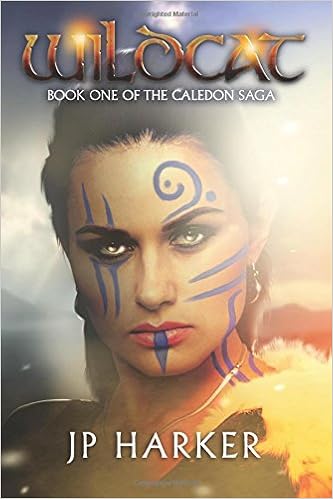
Character Interview with Rhianwyn from "Wildcat" by JP Harker

We had the pleasure to be able to interview the main character from "Wildcat" by author JP Harker.

Character Interview with Rhianwyn, daughter of Carradan from “Wildcat'

  1. Tell us a little about yourself? Where do you come from?
My name is Rhia, I am the third eldest child of Carradan, the High Chieftain of the Caderyn. I enjoy riding, swimming, fighting for my tribe and being… intimate with my betrothed, Bevan (not that we’ve gone too far or anything, the druids wouldn’t approve, but with the wedding coming soon it’s hard to keep restrained!). I come Bryngarth which is in Caderyn land, on the island that the Gaians now call Daeria.

  1. Tell us a little about your home, what are your feelings towards home?
My home is at Bryngarth, in the heart of the open plains and rolling hills of Caderyn territory. It is a beautiful place, though after the wedding we will likely move to Bevan’s home on the coast. I don’t really mind, I’ll miss my family but the coast is always being raided by Ierryn’s black ships so I won’t get bored.

  1. What motivates you along your journey?
Probably loyalty. My family are everything to me, followed closely by the tribe of course. I would love to continue to be a warrior for them but that may have wait a while. Bevan and I wish to have children, and until they are grown enough to take care of themselves I shall have to make them my priority. But I can’t wait until they’re old enough to take to battle with me!

  1. How do you see yourself/ how do you see yourself in relation to the rest of the world?
I see myself as a fighter, a daughter, and hopefully soon a wife and mother. I would say I know my rightful place in the world – it’s wherever my family and people need me the most. As far as everyone else is concerned, if they are not Caderyn then they’re either an enemy or a future enemy.

  1. What is most important to you in this world?
Home. Home and the people in it matter more than anything else. In all honesty, I am guilty of chasing glory for myself sometimes, but glory for me is glory to the tribe and to my father, so I don’t think it’s all that selfish.


  1. What characteristics do you consider important in a person? What kind of people do you try to surround yourself with?
Before anything else a person must be brave and dedicated. Someone can be the cleverest and friendliest, even the kindest and most loving person in the world, but if they lack courage and loyalty then I have no time for them. I like to have people around me who enjoy a good fight, a good feast and a good song, but they must have integrity as well.

  1. What do you see for yourself in the future? Where will you be? What kind of person do you want to become?
In the near future I will be a wife and then, with Marna’s blessing, a mother, likely living in Mobryn with Bevan and his family. If I can be as good a parent as my own mother has been I will count myself fortunate.


You can purchase a copy of Wildcat through Amazon.ca here and if you want to know more about Harker's work you can visit his website here.

Tuesday, 24 April 2018

Book Review: Callie's Revolution: The Audacious Adventures of a Woman on the Run by Tony Chiodo


Callie’s Revolution tells the story of young Callie Masterson, an aspiring journalist who follows an American troop into Mexico in chase of Poncho Villa, but what she finds is more than she bargained for. Expecting to see and report on the Mexican revolution she soon discovers that the true revolution lies within her.

The first half of the novel was very well paced with tight dialogue, which is a style I enjoy. I found Callie to be wild and perhaps a bit unbelievable. Everything seemed to be too well done, as she seemed to be great at everything and everyone loved her. But this definitely worked to her advantage, and to the advantage of the story. I had a difficult time, at first, reconciling what I know of 1916 to what was being presented in the novel. I’ll be honest and say most of my knowledge of the time period is mostly European with the war well underway, and being Canadian I did not know much of what was going on in the southern States. It was refreshing to read something new, and even more refreshing to not feel the need to confirm the research completed by the author. It’s a bad habit of mine, so I’m thankful the dialogue and story carried me away enough to forget about fact-checking.

The second half, however, felt quite slow. I felt that everything had wrapped up nicely and took me a while to adjust to the new pace of the plot. But now at the end of it, I recognize that the pacing was directly linked with Callie’s own life. It’s her time in Mexico that while she loved it, she was at a stand-still. Nothing was happening and she was becoming restless as I was with the pace. Once she found her new adventure the plot picked up once more until the end.

Without a spoiler, I’m somewhat disappointed with the ending, more about who she ended up with. Of course, the romantic in me was pleased but at the same time I wished the author had taken a bit more of a risk and left it the way we thought it would be. (It’s hard to talk about without spoiling it!)

Overall, I thought this was a well written novel with an interesting and well-rounded main character set in a wild and uncertain time. It was thrilling yet at the same time relevant to anyone seeking their true purpose in life.

Friday, 20 April 2018

Book Review: The Return of the King by J. R. R. Tolkien


I always find it somewhat difficult to review a novel that is so well known, even worse a novel that I have seen the movie for first...and even worse a novel that my husband has all the information about. He knows it all.

In The Return of the King we see the Lord of the Rings come to a close, and technically the novel itself is one with six “books” within it, so this review will be on books five and six: The Return of the King, and The End of the Third Age combined. In The Return of the King the plot follows two thirds of the fellowship: Pippin and Gandalf; and Merry, Gimli, Legolas, and Aragorn. Pippin and Gandalf make their way into Gondor and there help defend the city of Minas Tirith until the final battle. The rest travel through Rohan before moving into Gondor to aid in the battle at Minas Tirith before moving onto Mordor.

One thing that stood out to me was the way in which I read the novel. Had this novel been published today, I would have been much more critical of it in terms of style and unnecessary scenes. But knowing it was written in a different time, that makes a big difference. This novel was the culmination of everything in Middle-Earth, it seemed, everything coming to a head. The war to end the age. Of course, Tolkien lived through both World Wars, and that is very apparent in his writing. That may be what made this novel so much richer than the previous ones. With the true battle on the horizon, everyone’s true characters were shown. Tolkien did not put much emphasis on character development, but it’s clear the character he chose for this story were the ones meant to be on this journey. Everyone played their part, which cannot always be said in novels. Were there scenes that could be cut? Definitely. But I think the simple scenes, such as Pippin when he first arrives in Minas Tirith and he’s spending time with Beglerond, those showed the reality of a city before a siege. They all know what’s coming, but it was the waiting that Tolkien showed.

On the road we have Aragorn and the rest of his companions making their way to Gondor. Unlike the movie, Aragorn is ready to take the crown and defend his kingdom. This is the novel where I feel his character truly shows himself. He is strong and kingly. He has a heart for the people and is ready to take on the responsibility and use what he can in the coming battle. He does not flinch upon entering the Path of the Dead, as he has no need to. It is his birthright, the ability to walk along that road with no fear. While they make their way, the rest of the Rohirrim travel to Gondor and when they finally arrive I have to admit that it nearly brought tears to my eyes. The scene where the Rohirrim crest the hill, horns blowing to announce their arrival, it was probably one of the best written scenes in the entire novel.

As a quick note, I loved that Tolkien added in small descriptions of how the cultures and languages differed from each other. I noted this specifically when Pippin is being toured around Minas Tirith and the bell was ringing three hours past sunrise. He commented to himself that in the Shire they call it nine o’clock instead. It’s these small details that make the world come to life.

The End of the Third Age flips to the rest of the fellowship, Sam and Frodo the ring-bearer. We’ve already seen the love and devotion Sam has for his master, but as with all other points of the story, this comes to a head finally. It’s a type of love we do not see in modern novels, or even in society on the whole. Even when they return to the Shire (spoiler!) Sam is torn between marrying Rosie and moving in with Frodo. That’s some deep devotion right there.

If we can talk about character development, perhaps those with the most amount were Merry and Pippin. When they return to a ravaged Shire, they immediately step up. Yes, they were always a bit precocious and head-strong but they had now seen battle. They had faced true evil and defeated it. Again, Tolkien placed the best people for the job into the story. I say that, because he had created the world before the characters, but the characters had already been there.

While I can say that modern epic fantasy is not generally my cup of tea, I thoroughly enjoyed these two “books.” I find it awkward to read this style now, mostly because it’s almost not needed in our current times. Tolkien wrote this coming out of the war, so all of the elements within the story were so relevant. When I read this style now it sounds awkward in their attempt to sound like Tolkien. With that being said, this is a timeless novel that generations from now, in war or in peace, can appreciate. And perhaps while we’re living in this unsettled world we can remember Gandalf’s words of wisdom:

“It is not our part to master all the tides of the world, but to do what is in us for the succour of those years wherein we are set, uprooting the evil in the fields hat we know so that those who live after may have clean earth to till. What weather they shall have is not ours to rule.”

Wednesday, 18 April 2018

Guest post by Andrew Joyce for "Bedtime Stories for Grown-ups"

Hello, my name is Andrew Joyce and I’m here today to try to sell a few books.

I have a new book out entitled Bedtime Stories for Grown-Ups. It is a collection of short stories I’ve written over the years. Inside Bedtime Stories you’ll find tales of fiction and nonfiction. There are all sorts of genres within its pages, from westerns to detective stories to love stories and just about anything else that you can imagine. One of my stories—included in the book—was granted the honor of being included in a print anthology entitled The Best of 2011. Some of the stories are dark and some are lighthearted, but I hope you’ll find them all captivating.
There’s a whole lotta material in the volume—700 pages; enough to make sure you get your money’s worth … and enough to keep you reading for the foreseeable future.
Anyway, here’s one of the shorter stories from the book.

Bedtime Stories for Grown-Ups by [Joyce, Andrew]


Good-Bye Miami

For the first time in my life, I’m in love. And I think she feels the same about me. That’s the good news. The bad news is that we may have to break up … sort of. Shit happens. Allow me to explain.
Her name is Jill; we met early on a Sunday morning. I was jogging along the beach at the water’s edge one minute, and the next I was splayed out in the sand. I had tripped over a woman’s recumbent body.
After the requisite apologies, we started talking. One thing led to another and we ended up having lunch together. That was eight months ago and we’ve barely been out of each other’s sight since.
Today is another Sunday much like the one when Jill and I met, but things are a little different now.
I’m an FBI agent assigned to the Miami Field Office. I was awakened at five o’clock this morning by an urgent phone call to report in immediately. There was a terrorist threat. Hell, this was the granddaddy of all threats. At 4:00 a.m., a local television station received a call stating that there was a nuclear bomb planted within the city, and at exactly 4:00 p.m., it would be detonated unless certain demands were met. The caller said there was a package sitting in the parking lot of the North Miami office of the FBI that would authenticate the threat.
It turned out to be a small nuclear bomb, which is also known as a suitcase bomb. An attached note informed us it was exactly like the one planted in downtown Miami. It also stated that if there was any effort to evacuate the populace, the bomb would definitely go off the instant word hit the media.
Every law enforcement officer—city, state, and federal—was called in. We were given gadgets that register radiation, and all personnel were assigned grids. Each person would drive his or her grid. If the meter went off, a team would be dispatched with equipment to pinpoint the emanations. Then the eggheads would dismantle the bomb.
That was the plan.
We were ordered to tell no one of the threat, but there were many surreptitious phone calls made that morning, telling family members to drive to West Palm Beach for the day. I made my own call, telling Jill that I had planned a romantic day for the two of us and asked if she would meet me in Boca Raton. I gave her the name of the hotel where I had made a reservation before calling her, and said I’d be there in the early afternoon. She readily agreed, and now I know that she is safe.
So here it is nearing four o’clock and we’ll soon see if it was a hoax or not. The clock on the dashboard reads 3:59 … 4:00 … 4:01 ... 4:02. Nothing! I’ll be damned, the whole thing was a ...

You can purchase "Bedtime Stories for Grown-Ups" here. To learn more about author Andrew Joyce, you can see his website here.

Sunday, 15 April 2018

Interview with author of "Wildcat" JP Harker

Here is out interview with JP Harker, author of 'Wildcat' which is Book 1 of the Caledon Saga


Interview with author of 'Wildcat' JP Harker

  • What is your favourite genre to write? Why?

My genre of choice is Fantasy, though I’ve branched out into some Urban Fantasy/Spy stuff. I’m always tempted to do Historical Fiction and probably will at some point, but for now I like the freedom of being able to invent my own history (and if I want to throw some magic in, I can!).

  • What does your writing process look like? Did it take you a while to develop?

My process is pretty simple; I make an outline of bullet points based around Start, Middle and End, fill it in until the whole thing looks overcrowded, then split that single document up into chapter documents. I then flesh those out with more detailed bullet points until they look complete. Then I turn those bullet points into prose (this makes me seem very organised but in practice this gets a lot more chaotic as I keep making changes at each stage!)

  • What does you editing process look like? Do you allow others to read your writing?
I’d get nowhere if I didn’t let other people read my stuff – too many times I’ve gone through something with what I was sure was a fine tooth comb and then a proof-reader has given me pages of mistakes to resolve. I read through everything at least a couple of times before handing it to someone else but you really do need that external feedback.
  • Have you ever felt like quitting writing? If so how did you overcome those feelings?

More than once – when books don’t sell or someone actively dislikes something I’ve written I get discouraged, and a few times I’ve thought ‘what’s the point of spending all these hours writing if no-one wants to read it?’.
It sounds trite but I think it was Tolkien who said that he writes for himself, not for other people. You just have to stroke that ego and remind yourself that so long as you enjoy what you write (and you’re not relying on book sales to live of course) than that’s all that matters – keep at it.

  • How do you keep motivated to finish a writing project?

Sheer stubbornness!

  • Have you ever written something you didn’t like, but felt necessary for the overall story?

Oh yes! I recently killed off a character I loved but who had to go for the story to progress. I think if you want the reader to be emotionally invested you have to be invested yourself, and I remember feeling that terrible mix of; ‘they’ll go mad for this!’ and ‘why are you doing this!?’

  • What would be your advice for aspiring authors?

Creativity plays a distant second fiddle to perseverance. You can be as imaginative as you want, but it’s hard work that gets things done.

  • Is there anything you wish you knew before you became an author?

See above!

You can purchase a copy of Wildcat through Amazon.ca here and if you want to know more about Harker's work you can visit his website here.

Monday, 20 November 2017

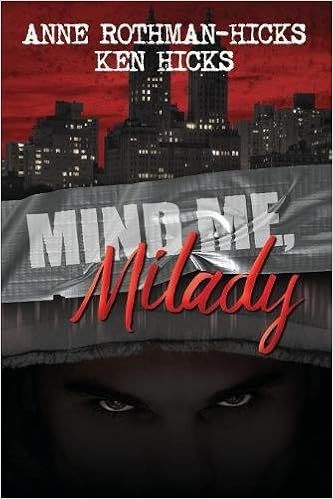
Interview with authors of "Mind Me, Milady" Ann Rothman-Hicks and Ken Hicks

On Writing had fun interviewing Jane Larson form the novel "Mind Me, Milday"


Tell us a little about yourself? Where do you come from?
 I was born and raised on the Upper East Side, before it became gentrified. In those days, it was a far more gritty place to live. There were Irish bars on every other corner of Third and Second Avenue. Small businesses lined the streets. I remember we had a store where the guys fixed TVs and would lend you one until yours was done (before cable of course). And there was a lawyer who sat in a flannel shirt in his storefront office on Third Avenue, selling insurance and doing notarial work to make a buck. No nail salons. God, I wish it were like that today.

Tell us a little about your home, what are your feelings towards home?

I’m a bit conflicted on the subject. My mother, Martha, was a lawyer with a storefront office on 92nd Street in the same building where we lived on the third floor in a rent-controlled apartment. She was a crusader for women’s rights, and she represented women who needed support for themselves or their children, or were battered by men, or otherwise victimized by the system. Growing up, I was always the daughter of Crazy Martha, when I just wanted to be a kid and fit in. Plus, these types of people can pay almost nothing, but she took their cases on anyway and worked all kinds of hours. I often felt I had to make an appointment to see her. Sometimes women slept on our floor because they could not go home. I swore I would never be like her, but then life happens. I quit my job in a major law firm where I was doing very well (check out Weave A Murderous Web). Now I am working out of Martha’s old office and representing some of the same people she once did.

What motivates you along your journey?

Wow. Paying the rent. Buying food. I’m not the crusader Martha was, but when I see someone down on their luck or who just had been dealt a bad hand by life, I feel the urge to help them. There is a lot of injustice in the world. Martha used to say that she could not fix the world, but that she would not tolerate bad things happening to good people within her reach. It’s sort of like Voltaire telling us to mind our own garden.

How do you see yourself/ how do you see yourself in relation to the rest of the world?

One thing I learned from Martha was that I should not worry about what other people thought. She taught me to think for myself, examine a problem thoroughly, and if I felt I wanted to fix the problem, to let nothing and nobody stand in my way. She was a bull in a china shop. One day, I hope to write about some of her cases.

What is most important to you in this world?

Being able to sleep at night without the ghost of Martha perched on my bed in the middle of the night, waiting for me to wake up and realize that I’ve done something that is not right. It used to happen a lot when I worked for a big firm and made lots of money. Not so much anymore. It seems she might like the way things have turned out.

What characteristics do you consider important in a person? What kind of people do you try to surround yourself with?

Loyalty, honesty, and the capacity to love. I’ve found that a few times, but again, life intervened. I will keep looking.

What do you see for yourself in the future? Where will you be? What kind of person do you want to become?
It’s getting a little late for me, but I think I would like to have a kid. If a man came with the package, that would be okay, as long as he was loyal, honest and loving. If I just had the kid, that would be okay too. Martha raised me as a single parent. In fact, she never told me who my father was. It used to bother me. It still does.


To learn more about the writing duo of Ann Rothman-Hicks and Ken Hicks, click here.

To purchase their book "Mind Me, Milady" click here.

Friday, 17 November 2017

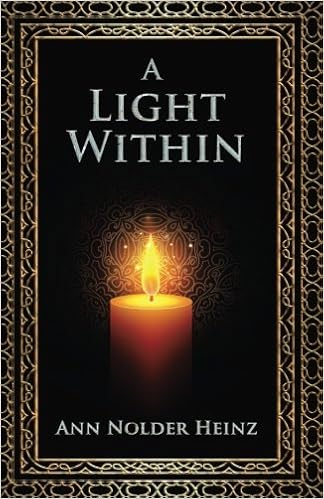
Interview with author of "A Light Within" Ann Nolder Heinz

On Writing caught up with author Ann Nolder Heinz to talk a little bit about what writing means to her.


What inspired you to start writing?   
I grew up in Waterloo, Iowa, where life flowed as deep and tranquil as the Cedar River that divided east from west and the neighborhoods were safe for children to play outside until after dark. I was fortunate enough to be born into a family where books were collected and revered. My earliest memories are of the sublime pleasure to be had from reading, first cuddled next to my grandmother in her big stuffed rocking chair as she read the children’s classics aloud, then curled up on my own as I graduated from story collections and Little Golden Books to Nancy Drew and the Hardy Boys and finally to the contemporary and classic novels in my mother’s library. I was already a lifelong book junkie, the first step on the road to becoming a writer.

I discovered the allure of writing in the fourth grade. I was blessed with teachers who encouraged creativity in their students and required us to write several stories every year. 
I enjoyed the process so much that I soon began writing stories for my own pleasure. I confess that in the early days I was better at conceiving and starting a story than I was at following it through to conclusion, as is proven by the numerous “Chapter 1’s” in the box of my juvenile writing stored in our attic. But the appeal was irresistible, and it found me again as an adult. Rather than a conscious choice, it was an itch I had to scratch regardless of whether the end result were judged as a success or failure by others. As it happened, I experienced much more of the latter than the former through the years, but I discovered that to feel truly happy and complete, I must soldier on.

What does your writing process look like?
Desire was just the catalyst for my writing career. Learning and perfecting the skill necessary to produce a publishable manuscript required years of hard work. Through trial and error, I have developed a process that involves three phases: concept and planning, first draft, and editing and polishing. Once I have settled on an overarching idea for a book, I begin fleshing it out with the main characters. I give each one physical and emotional attributes and backgrounds that are interesting and fraught with possibilities for conflict. I do whatever initial research is necessary. When my internal instincts tell me it is time to move past the theoretical, I begin writing. I allow my characters to determine the scope and direction of the plot, adding in minor characters and subplots as they occur to me. When all threads have been tied up in a satisfying conclusion, I move on to the difficult task of being my own worst critic. I pore over the writing with the goal of tightening the prose until it is crisp yet effective, looking for redundancies, awkward phrasing, loquaciousness, overuse of “telling” rather than “showing,” and anything else that interferes with the readers’ willingness to suspend disbelief and immerse themselves in the story.

This process is very much like riding a virtual rollercoaster. Conceiving an idea and carrying it through into the book’s initial chapters provides an emotional high that is impossible to describe. There comes a time in every manuscript, however, when my momentum slows and I must grind out the progression of the plot. This is the work’s most vulnerable time, and I must call on sheer determination and persistence to continue on. Excitement returns when the final climax and denouement are clear to me, and I often cannot write fast enough to get it all down. This energy carries me into the editing phase, and I am usually able to sustain a steady pace through several read-throughs until I am satisfied the manuscript is as good as I can make it. Although the process is grueling, I can say without hesitation that I never fail to find joy and immense satisfaction when I finally make it to those final words: The End.

What is your favorite genre and why?
I began writing what I most like to read: mystery and psychological suspense. I wrote in these two genres for many years, my last four novels being set in the delightful little river town where I live. A few years ago, a fortuitous happenstance pulled me away from this genre and into historical fiction. I participated in a tour of Underground Railroad sites in the small town of Jacksonville, Illinois and was deeply impacted by the narrative of our guide, a young black journalist who had made a study of this subject. By the end of the day, I had conceived the idea for a novel about the Underground Railroad entitled Last Stop Freedom with two female protagonists, one a black slave, the other a white woman oppressed by the men in her life. Thus began a writing adventure such as I had never experienced.

I discovered that much has been written about the Civil War but very little about the decade preceding it when the seeds of that horrific war were planted and grew. It was a period of time vital to fulfilling the values and ideals set forth by our founding fathers but left only half realized by them. My research took me into every facet of mid-nineteenth century American life: social, political, religious, and economic. I ended up writing three books spanning this period, each one taking a minor female character from the previous book and developing her story in a different direction. All three spotlighted the themes of oppression, rebellion and the freedom to determine one’s own destiny.

Do you model characters after real people? Do you have favorite characters?
The role of a character is to advance the storyline. If a character is modeled on a real person, the plot must fit that character rather than the other way around, which raises boundaries that restrict the scope of the story. On the other hand, creating characters out of the author’s imagination gives him or her delicious power. I am able to give my protagonists qualities that make them the women I would like to be or the men I would most like to befriend or love. Likewise, my antagonists can be every bit as conflicted and wrong-headed as most flawed human beings are. Then I have the ability to manipulate events so the outcome reflects my ideal world. Great fun!

That is not to say that real people cannot play a part in a story, particularly one set in a historical context. But that person’s presence in the story must coincide with the overarching reach of the plot. It is also important to adhere to historical truth. Using a historical character incorrectly will only interfere with the readers’ ability to fully immerse themselves in the story.

As for my favorite characters, I truly enjoy them all and am always sad to leave them when the story is done. That being said, Julia and Fanny from Last Stop Freedom are far and away my most beloved. Julia has the gift of faith and the tenderhearted capacity to love unconditionally. Fanny has the stoic wisdom to accept what she cannot change and the courage to risk everything to find a better life. I admire them both.

What would be your advice for aspiring authors?
WRITE BECAUSE YOU CAN’T NOT WRITE.

It is that simple. For me, the lure of writing is an itch I have to scratch regardless of whether the end result is judged as success or failure by others. I have experienced much more of the latter than the former through the years, but I discovered long ago that in order to feel happy and complete, I must soldier on.

That said, I acknowledge it is not always easy. For me, the most challenging aspect is managing the emotional fluctuations I experience when I write. The highs come when an idea is blossoming and the plot path forward is clear. The lows come when the writing does not flow and I am uncertain of the mission I have set for myself. The trick is to keep working regardless. Then there is the dreaded “writer’s block,” which is a common malady from which I am not immune. My cure is to place myself in a situation of total relaxation in order to allow my subconscious to work on the problem and come up with a solution. My favorite setting is a deep hot bath. Another big hurdle is managing the rejection letters once the work is complete. Nothing is more depressing for a writer than receiving this kind of news ─ and I have received more of it than I care to remember. My policy has always been to permit myself to mourn for a short time then force myself back to work. Recovery is easiest when there is a new project in the pipeline.


Bottom line, get to it. Decide on a project, let the words flow, then dissect and analyze what you have written. Take a class, join a writers’ group, read any advice you can get your hands on. My own contribution is a set of writing tips on my website www.fictionbookmates.com. Regardless, the best idea in the world is useless until it is communicated to others. So write it! You will never regret that decision.

To learn more about the author click here.

To purchase "A Light Within" click here.