Friday, 3 August 2018

Interview with author of "The Rain Never Came" Lachlan Walter

Read our latest interview with Lachlan Walter, author of "The Rain Never Came."

The Rain Never Came by [Walter, Lachlan]


What is your favourite genre to write? Why?
I’ve always written within speculative fiction: typically science fiction and post-apocalyptic fiction, with the odd detour.

Like many science fiction writers who grew up during the 1980s, I was a nerdy kid surrounded by a media landscape saturated with science fiction, and living through a point in time in which the genre’s terminology and motifs were being absorbed into our cultural language. To an enquiring mind that soaked up external stimuli like a sponge – especially one obsessed with books, giant monsters, Ghostbusters and Star Wars – science fiction seemed like the logical way to express and understand the influence of this changing world.

And then there’s science fiction’s ability to make us question what we know, by reframing it as a ‘what if?’ and then digging deep. To this particular fan, the ability of science fiction to open our eyes to what is by showing us what it might become, is nothing short of genius.

Do you model characters after real people?
I think I speak for many writers in saying that I don’t so much model my characters after real people, but rather appropriate aspects of real people and attribute them to my characters. This is certainly the case with The Rain Never Came – no single character is based on a real person, but the same can’t be said for some of their behaviours, mannerisms, figures-of-speech and peculiarities, not to mention some of the character interactions.

We’re fascinating creatures with individual habits and quirks that would seem odd, if not bizarre, to anyone but ourselves. And so, to make a character more human and alive, these habits and quirks need to shine through, even if only subtly. The trouble here is that making up a quirk or habit can seem ridiculous, even if only to ourselves – which can then have a knock-on effect on our confidence and flow.

This is why it’s okay to occasionally steal things from real life and give them to your characters – sometimes the truth really is stranger, more interesting and more convincing than fiction.

Have you ever written something you didn’t like, but felt necessary for the overall story?
Absolutely, as I think every writer has – there were many instances of this in The Rain Never Came, some of which anyone who has read it will recognise straightaway. But as unlikeable as these instances may be, they’re there for a reason: realism.

All writers should strive to make their stories as believable as possible, even if the events and locations therein are purely fictional or speculative. We should do our best to make them ‘real,’ especially their characters and their characters’ lives. And a large part of what makes our own lives ‘real’ are ups and downs – no life is perfectly balanced and as smooth as the proverbial, no matter the surface impression. Happiness and sadness, joy and depression, excitement and boredom, engagement and disenchantment; they are complimentary emotions that can only exist in contrast to each other.

Our stories should reflect this: good things should happen, and so should bad things. It goes without saying that we often tend to prefer writing the ‘good’ to the ‘bad’ – show me a serious writer who doesn’t invest a fair bit of emotion in their work, and I’ll show you a liar. And so it is with The Rain Never Came. Bad things happen in it, things that I didn’t particularly like writing, but they were necessary for both the story as a whole and as realistic balances to the good.

Do you take criticism hard or do you have a thick skin? Have you ever received criticisms that you felt were unjustified or too harsh? Are you your worst critic?
 So far, most of the feedback I’ve received on The Rain Never Came has been positive, or at least encouraging. I’m ready for anything negative, though – quality is in the eye of the beholder, as some people say, and no piece of art, be it a book or a song or a movie or an actual piece of art art, is ever perfect. And nor should it be.

Luckily, I’ve got pretty thick skin. And it helps that I’m hard on myself, and push through a lot of redrafting and rewriting before showing my work around for an initial round of feedback – I don’t want someone to judge my work if it’s full of logical flaws, continuity problems, grammatical mistakes, plot holes and so on. That way, each piece is as polished as that point in time dictates, and so the feedback received is on the major elements instead of the minor.

How do you keep motivated to finish a writing project?
For me, the simple answer is to have another project to look forward to when I’m done. I believe that most writers have more ideas than they know what to do with – if we can harness that, and stay sharp enough to use these ideas as blueprints for future projects while still dedicating our passion to the project in front of us, then there’s always something to look forward to. Anticipation and delayed gratification: there’s sometimes no better motivator. 
 
What would be your advice for aspiring authors?
There’s as much advice for aspiring authors out there as there are aspiring authors, but I’ll share a way of thinking that works for me. Writing a good book only takes a few things: a spark of talent that can be nurtured, an idea that can become a story, and discipline and routine, as well as a lot of time and a job that allows you that.

Find these things, and you’ll get there. 

To learn more about author Lachlan Walter click here.
To purchase "The Rain Never Came" click here.

Wednesday, 1 August 2018

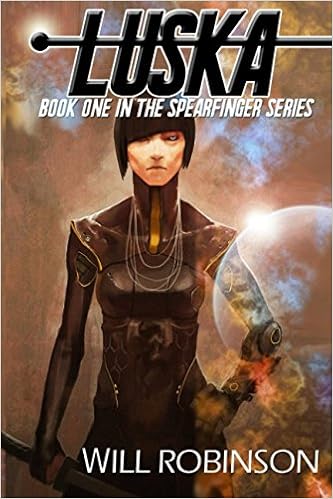
Interview with the author of "Luska" Will Robinson

Check out our interview with Will Robinson, author of "Luska"


What inspired you to start writing?
I was inspired to write by my psychologist. By the time I was 22 both my parents had died of cancer and my best friend had been killed in a car accident. Although I initially banished any emotion to the deepest, darkest hole of my psyche and went one with my life like a good southern man-boy, I slowly started to fall apart. I was really at my wit’s end when I found my psychologist, a real hard-ass Israeli woman who got me to finally examine the uncurated emotional memories  of my youth. I used to be an avid drawer and painter, but I had allowed the creative part of my brain to be cut off and almost wither away. She suggested I write something. That something eventually became my first novel, The Fiery Salamander.

When did you complete your first piece of writing? What was it? How was that process?
I completed my first piece of writing  (first draft at least) in maybe 2009. I was a stay at home dad at the time, so I had moments of freedom to work on it if my son was asleep or preoccupied. The book is called The Fiery Salamander, a YA historical fiction novel set at the end of French and Indian War  (which should finally be out in early 2018). I had to do a lot of research for that book, but I was familiar with the colonial period through my archaeological studies and work on sites from the period.  That got me into the habit of writing. Habit is the key. It has to be such an innate part of your schedule that if you don’t do it, you feel bad.

What kinds of sources do you take inspiration from?
My family and friends are a great source of inspiration. I also consume a lot of anthropology, history, general science, cognitive psychology, and (of course) fiction which inspires my work. But also travel; I went to Ireland recently, which is the setting of the fantasy novel that I am working on at present. Authors and thinkers that inspire me are Geraldine Brooks, Hilary Mantel, Vernor Vinge, Nicola Griffin, Kim Stanley Robinson, Neal Stephenson, Frank Herbert, Ann Leckie, Isaac Asimov, Napoleon Chagnon, Steven Pinker, Robert Sapolsky, and many more. My sci fi novel, Luska, has anthropological themes, but it is an amalgamation of inspiration from many of the authors and people I have read and interacted with all my life.

Do you model characters after real people?
Usually not actively, but passively. Eidi, one of the main characters in Luska, has what she calls “spells” where she sees into possible futures. It is certainly based on my experience of having anxiety attacks. Her heart races and has a feeling that she is going to die, which is the way I would feel when I used to have them ten years ago. It was only after wiring the first version of the scene did I realize that Eidi was actually having an anxiety attack (I, unfortunately, can’t see the future ).  Also, her grandfather is loosely based on my Korean father-in-law and his experiences of growing under Japanese rule in Pyongyang. But this only goes so far-- my father in law was not evil, just a little grumpy.

How do you keep motivated to finish a writing project?
A key to how I have been able to keep motivated is to keep a specific time to write. I am a morning lark (as opposed to a night owl). I have always been my sharpest early in the morning and that is when I write. Just having that time during the small hours when no one is awake, keeps me free from distractions and my eyes on the prize. If a problem arises in the story that I can’t write through, I will stop and do something else, like take a walk. Sometimes, if I am lucky, my brain will figure out a solution. Now I say this, but it  is not always true, for I am a fallible human and I also like to play computer games. So if that becomes a distraction at home, I go to a coffee shop, put on headphones and retreat into my little shell while gulping coffee and forming brain fruit, also called ideas.

To learn more about the author Will Robinson click here.
To purchase "Luska" click here.

Thursday, 26 July 2018

Interview with the author of "Legacy: The Reunion" Michelle E. Lowe

Here is our interview with Michelle E. Lowe, author of "Legacy: The Reunion."

Legacy: The Reunion by [Lowe, Michelle E.]


  • What is your favourite genre to write? Why?
    • Generally, I write fiction, and recently I’ve ventured into steampunk. It’s a fun genre to go into and it takes a lot of imagination to succeed at it, too. With fiction, a writer can play around with facts, or discard them completely and create a parallel world. The limit to what can be created is zero, and the imaginative ways to explain how made up things function takes some creative intelligence. You really work your brain coming up with how everything works and make it believable no matter how unbelievable it is!
  • Do you model characters after real people?
    • Mostly my characters come from my own imagination. There might be some traits of actual people in a few, but all in all, they’re compete creations of my own doing. These characters of mine usual start out as complete strangers to me, too. I’m too lazy to write out character profiles, documenting what they look like, their habits and such. I just write them. A lot of times, even with the protagonists, I have no idea who these individuals are. They’re almost like real people that you have to get to know through the course of time. The more I write about them, the more I understand the kinds of people they truly are.
  •  Have you ever felt like quitting writing? If so how did you overcome those feelings?
    • Every writer contemplates and/or has given up on writing for a time throughout their career. Myself included. Writers are fragile beings who rely on the approval of our readers. We’ve all gone through the phases of telling ourselves that we’re not good at this writing stuff and that we’re only kidding ourselves, especially when we get a rejection letter from a publisher or agent. For me, it wasn’t a one or two-star review, or negative criticism about any of my novels, for I have learned from them, believe it or not, and worked to improve my skills as a storyteller. No, the things that have gotten me to almost throw in the towel have been two things. One, (and it’s going to sound petty) but lack of sales. Yip. I know some will say storytelling isn’t about making money, but let’s face it, it’s THE DREAM to be paid doing what you love, right?. Making decent revenue so I can focus more on writing and actually build a career isn’t a selfish goal, and it would be fulfilling to know that my stories are something others enjoy. But now I’ve dug in my heels a bit deeper and promoting more and more, working on building a fan base, which is how success begins.
      The second reason I’ve thought about putting down the pen is the nothingness. Countless times I’ve given a copy of my book to people who promise to review it and then hear nothing back. At least with a poor review or rating, a writer at least knows what the reader thought. It’s the NOT knowing whether or not the reader likes it that kills us because we just assume they didn’t like it, but we’ll never know why. And it happens more often than not. As I mentioned before, we rely on the support of the people who read our work, so what gets me through those rough patches is a reader saying he or she actually liked my writing style and enjoyed the story. When I get a great review, it really does perk up my day because those good reviews are telling me that I might actually be doing something right with this writing thing. 
  • Do you have favourite characters from your own writing? What made them so special to you?
    • Yes! And one of them is Pierce Landcross. He is the protagonist of my fantasy/steampunk series, Legacy. When I decided to write this series, I wanted to not only thread together entertaining adventure stories, but I also wanted to fill them with fun and unique characters. So I came up with a lead character that’s intelligent, charming, clever, and yet a bit of hick. Readers have taken a shine to Pierce, too, which thrills me to no end.  
  • What would be your advice for aspiring authors?
    • I once read that you can make anything by writing. And it’s true! Writing opens up the mind, introduces new perspectives and brings people into worlds they never knew existed before. Writing is an art form that is beautiful, tragic, complex, stunning and horrifying. My best advice is to develop thick skin, learn from constructive criticism and read! Read! Read! Read! Because when a writer is reading, it’s different from non-writers. We’re not just reading, we’re studying. We’re finding out new ways to describe things, broadening our vocabulary, and learning how these other authors thread their stories together. Whatever genre you write, reading will help significantly when you put your own pen to paper.
  • Is there anything you wish you knew before you became an author?
    • I do wish I understood beforehand just how hard it would be. Sorry to break it to you aspiring writers. Seriously, writing is hard work and becoming a successful writer is even harder still. If anyone thinks otherwise they’re out of their minds! I was nineteen when I began this journey to be a writer and author. I even dropped out of college to pour all my time and effort into it. I’ve spent years studying how to write, went through an online workshop class, and learned from my mistakes along the way. Honestly, I can see how people turn into full-blown alcoholics trying to do this stuff and achieve at it! And after twenty years of sinking so much of myself into my passion for writing, I’m still climbing that ladder of trying to get noticed, trying to get my work and name out there above the thousands of writers just like me. It’s tough, really tough, and it can cause a mental breakdown. Even so, would I give up telling my stories? Nah!
To Learn more about author Michelle E. Lowe click here.
To purchase "Legacy: The Reunion" click here.

Tuesday, 24 July 2018

Extract of "The Rain Never Came" by Lachlan Walter


In a thirsty, drought-stricken Australia, the country is well and truly sunburnt. As the Eastern states are evacuated to more appealing climates, a stubborn few resist the forced removal. They hide out in small country towns – somewhere no one would ever bother looking.
Bill Cook and Tobe Cousins are united in their disregard of the law. Aussie larrikins, they pass their hot, monotonous existence drinking at the barely standing pub. 

The Rain Never Came by [Walter, Lachlan]

Without the slightest warning, a raging noise blew in – a roar that tore through the night and shook the earth. The dogs out the front of the pub started howling. Conversations faltered as everyone fell quiet. The noise kept on, steadily growing louder. Tobe and I turned, scanning the sky, seeing nothing. I looked over at him – he was already running for the road, heading for the hill behind the pub.

I followed, unexpectedly clearheaded, taking everything in as if it had been laid out on display.

Everyone ran with us. Sheldon huffed and puffed, cursing his old body. Louise jogged next to me, smiled at me, rapidly overtook me. The Veidts hurried along, somehow making the process look dignified. Max and Maxine moved fast yet made it look like they were taking it easy. Cathy Ng half-limped and half-ran, clutching at her dressing gown, trying not to catch herself in it. The Kumari Kid darted back and forth, circling the crowd, urging everyone to move faster. The First Country captain led his people on, trailing well behind, watchful and wary.

We kept running. We crested the hill. We all stood in silence, raggedly trying to catch our collective breath.

The wind started, furnace-hot. Its screaming whine and the roar that tore through the sky were the only sounds in the world. From the corner of my eye I saw someone lick their finger and hold it up in the air. I heard someone else say: “It’s coming from the west, dickhead.” And then the word rain seemed to be falling from everyone’s lips.

A flash lit up the horizon, staining the sky dull-orange and crimson-red. Someone started yelling: “Light! Light! Light to the west!”

For a moment, it burned too bright, blinding me. It soon faded away, only to then happen repeatedly. I looked around; everyone seemed to have their eyes shut and their fists clenched.
The world shook again.

We waited, all eyes fixed on the horizon, everyone saying the same word over and over: Rain! Rain! Rain! But none came. After a while, people started drifting away and the only sound left was their angry mutterings and disappointed sighs. I turned my back on the horizon as well. Like everyone else, I stared at the ground as I walked. No one wanted to look anyone else in the eye.

To purchase "The Rain Never Came" click here.
To learn more about author Lachlan Walter click here.

Thursday, 7 June 2018

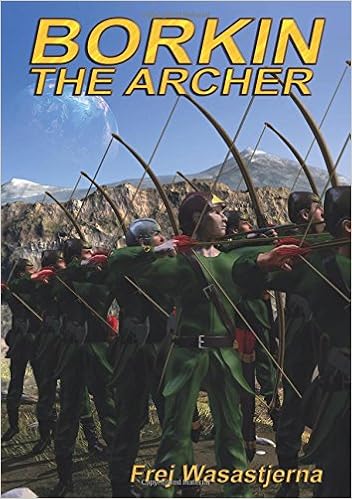
Character Interview with Borkin Krauk from "Borkin the Archer" by Frej Wasastjerna

We are so lucky to be able to speak with Borkin Krauk, main character of the novel 'Borkin the Archer' by Frej Wasastjerna


  1. Tell us a little about yourself? Where do you come from?
    I was born in a village in southern Sharauth, early in Cycle 111... excuse me...
    Sorry for the interruption, that was the author reminding me that the Nurasagi calendar is unfamiliar to you and that even he can't tell when I was born in Terran terms. In fact, he suspects that that isn't even a meaningful question. I don't understand this multiverse stuff myself. Probably even he doesn't.
  2. Tell us a little about your home, what are your feelings towards home?
    Home, now where is my home, really? Sharauth is where I grew up. Now I've spent a bit more than three cycles in Nurasag... excuse me, nearly eight Terran years. Here is where I got married, here is where I expect I'll live several more cycles. Maybe some day I'll have saved enough that I can go back to Sharauth and buy myself a farm or shop or something. With luck, I might be able to do it while my parents are still alive so I can see them again, in addition to my brothers and sister.
  3. What motivates you along your journey?
    Apart from just making a living and giving Lieni something like the life she deserves, I have two main goals in life. One is securing religious freedom. The other is putting an end to the slave trade. And as if those two goals weren't hard enough in themselves, they contradict each other! How in the name of Angramansh am I supposed to combine them when the slave trade is essential to fund the struggle for religious freedom?!
    I promised Lieni to do what I could to stop the slave trade, and I meant it. But I can't betray Kuartsha and his fight for freedom. So what am I to do?!
  4. How do you see yourself/ how do you see yourself in relation to the rest of the world?
    Huh?? Well... I suppose I could describe myself as a plaything of fate, of the gods or whatever. Sometimes the gods get weird ideas.
  5. What is most important to you in this world?
    It's Lieni, that's clear. When I married her, I swore on a holy sword that I would protect her, at the cost of my life if need be. And I very much meant that too. But now she's got kerpeif! I can't protect her against diseases! So, again, what can I do? If either of us has to die, that would be my task – even my right. But now there's nothing I can do!
    Okay, kerpeif doesn't kill all its victims. I suppose I can hope and pray.
    But I doubt that that will do much good.
  6. What characteristics do you consider important in a person? What kind of people do you try to surround yourself with?
    Hmm... well, given a choice I would prefer nice people. In practice it hasn't so much been a question of what I prefer. Circumstances have decided for me.
  7. What do you see for yourself in the future? Where will you be? What kind of person do you want to become?
    I have no idea. What can a single longbowman hope to achieve?

If you want to buy 'Borkin the Archer' you can here. And to learn more about the author see their website here.

Thursday, 10 May 2018

Interview with the author of "The Spirit of Imhotep" Maria Isabel Pita

Take a look at our interview with author Maria Isabel Pita, author of "The Spirit of Imhotep"


The Spirit of Imhotep (Lucid Dreams & Spiritual Warfare Book 1) by [Pita, Maria Isabel]

  • What is your favourite genre to write? Why?
    • Romance. It's my favourite because it's about love, which covers everything, not just the relationship between a man and a woman. Our relationship with the gift of Creation is a romance between our soul and God, full of mystery and wonder, and a drawing ever nearer to the ultimate desire of being with Him forever. Creation itself is a Gift overflowing with little presents at every moment. Love is the only reality, and therefore the only thing worth writing about, in any form – the romance of being beloved and created souls.
  • Do you model characters after real people?
    • Yes, and no. Some characters are inspired by my love for certain people, but as I write, they become uniquely themselves, developing a mysterious life of their own. And sometimes a main character is inspired directly by the Holy Spirit, and these characters are, I feel, the most intriguing, and writing about them feels like having a real relationship with someone.
  • What does your writing process look like? Did it take you a while to develop?
    • When I begin a novel, I begin writing before breakfast, and write all morning, and sometimes into the afternoon, depending on if I'm in the middle of a scene. But usually the afternoon is reserved for a quick first edit of what I wrote in the morning. And I keep this up until I'm finished with the book.
  • What does your editing process look like? Do you allow others to read your writing?
    • After quick edits while writing the book, the real gruelling work of editing begins. I do the first two edits on my computer, then I transfer the file to my Kindle and read and edit it on there at least two times, usually three. Then I create the print book, and while reading that version, do the final edit. Editing for me is like removing all the dirt around the diamond and cutting and shaping it until it shines as brightly and beautifully as humanly possible.
  • Do you take criticism hard or do you have a thick skin? Have you ever received criticisms that you felt were unjustified or too harsh? Are you your worst critic?
    • When you're in love with someone, do you like it when people criticize them and point out all their flaws? I love my books because I wrote them in love and for Love. With that said, I know that no book is perfect, and then there is the matter of individual tastes. You cannot please everyone. I seek to please God first and foremost, and I know those with similar soul-tastes to mind will also enjoy the journey. Constructive criticism is welcome, for we all must continue to grow as people and therefore as writers. However, there is a form of criticism that is not positive which stems from an opinion about something that has nothing to do with the actual book. For example, criticizing my book simply because you don't believe God speaks to us through dreams anymore. And yes, I am definitely my worst critic. That's why I spend so much time polishing my work.    

To purchase your copy of "The Spirit of Imhotep" click here.
To learn more about the author, Maria Isabel Pita, click here.


Thursday, 3 May 2018

Interview with the author of "Borkin the Archer" Frej Wasastjerna

Our exclusive interview with author Frej Wasastjerna, author of 'Borkin the Archer"


  • When did you complete your first piece of writing? What was it? How was that process?
    It was sometime between 1956 and 1963. I was in my teens at that time. The story was written in Swedish and its title was En rutinartad spaningsflygning, which translates into English as A Routine Reconnaissance Flight. This title was ironic, since the pilot of the flight in question wound up dead.
    The story was set in what I call IU1, for Imaginary Universe #1. I had started developing this universe when I was 7, and eventually it became so cluttered with impossibilities and absurdities that I dropped it (not entirely, I still may think about design details in it, but I don't write about it.)
    IU1 was followed by IU2, which I started developing sometime around 1960. It's the setting of my Iagyh War stories, the first of which, Till Death Do Us Part, I wrote in the late 1970s. A much improved version of this story, along with several other stories, is available at https://kotisivukone.fi/app/www/frejwasastjerna.kotisivukone.com/7
    Soon IU3 came along, and that's where I've put all my novels. IU3 isn't really a single universe, it's several universes, each with it's own laws of nature, so magic can work or not as I please. There is a cosmology tying them together (based on an idea I had about 1965), but I haven't really described this.
  • What is your favourite genre to write? Why?
    Fantasy.
    Actually my first love was science fiction. I encountered it at the age of 7. It's also an important part of my output (see for instance the Iagyh War series mentioned above). But there are two problems with science fiction:
    1) I know too much about science, so I want to explain everything.
    2) Fantasy generally ages better than science fiction. SF often tries to keep some connection with reality, and as our knowledge about reality improves, SF is susceptible to becoming outdated. Fantasy, with no pretensions to realism, is immune to that problem.
    So what I write is mostly either fantasy or SF, but sometimes it may be hard to classify. For instance my recent novel Borkin the Archer doesn't look much like SF, since there's no technology in it more advanced than fore-and-aft rigged sailing ships and primitive gunpowder weapons. On the other hand, there's no magic at all. So I call it SF on the strength of the IU3 cosmology in the background providing the reason why there are people on the planet in question.
    I also sometimes write other stuff. For instance, one story of which I recently wrote a first draft, is almost pure historical fiction.
  • Do you model characters after real people?
    Most often not. I may use myself as a starting point, at least so that I have the characters acting in ways that make sense to me, but I make whatever changes the story requires. For instance, while the unnamed protagonist in my story Leonids is otherwise rather like me, he's much less acrophobic. I lack the courage of the eponymous protagonist in my novel Tochwyatis. And I'm not a man-eating female troll like in Lead Me On...
    Occasionally I do model characters after real people. The most extreme example occurs in one of my Iagyh War stories, where there is one character whom I modeled as closely as I could on a real person I know. But the motives I attributed to her are nonetheless speculation.
  • What does your editing process look like? Do you allow others to read your writing?
    I do most of my editing myself. Sometimes I do allow others to read my writing, for instance at the critique group Critters. But I do that less often than I should. See the next question.
  • Do you take criticism hard or do you have a thick skin?
    I really ought to have a thicker skin. But I do sometimes submit my stories to critiques, and I have found that useful though unpleasant.
  • Have you ever received criticisms that you felt were unjustified or too harsh?
    Sometimes, not all that often.
    So far I've seen 4 public critiques of my work: 3 of Tochwyatis, 1 of Mixed Nuggets. All 3 critiques of Tochwyatis make sense, both the two favorable ones and the rather unfavorable one. But the critique of Mixed Nuggets does not make sense in my view.
  • Are you your worst critic?
    Not where writing is concerned, though I do admit that there are flaws in at least some of the stuff I've written. I just couldn't avoid them.
If you want to buy 'Borkin the Archer' you can here. And to learn more about the author see their website here.