Sitting in the darkened corner of the large, ornate room, Cornelius Clarkson could smell the
nervousness of the man standing in front of John Bannister’s magnificent, mahogany desk. The man
wiped his sleeve across his brow, rocking back and forth, his hands gripping the edge of his hat. The
man never took his eyes of Bannister. Clarkson grinned, enjoying the moment, appreciating the
power Bannister had over others.
He had met Bannister more than ten years ago when he was in his late teens, bored with his life
on the estate and anxious to find adventure. He had quickly realized that Bannister had the capability
to provide him with the excitement he craved. Bannister had been visiting his uncle, Sir Godfrey
Copley, the High Sheriff of Yorkshire and Clarkson had listened to the conversation, amazed that his
uncle had agreed to pay Bannister twenty pounds for every highwayman and horse thief Bannister
named who was successfully prosecuted. Clarkson had determined he would find out as much as he
could about this short, wiry man with distinctively large ears, dressed in simple clothes. He
4
established that Bannister was the son of a craftsman who used to work on Wentworth’s estate, that he
had died in an accident and left Bannister’s mother to bring up a family of eight children in near
poverty. Bannister had left home at fifteen and gone to London where, rumour had it, he had joined a
band of footpads, robbing wealthy merchants and making his fortune. When he had returned to
Yorkshire, he had quickly wooed and married a squire’s daughter and moved into this grand house at
Conisbrough, his wife producing three healthy children.
With an income that was totally inadequate to fund Clarkson’s lifestyle of gambling and
whoring, he had started working for Bannister, gaining his trust, introducing him and his family to
local dignitaries, Bannister quickly developing a liking for his role as a country squire. Clarkson
made sure Bannister was always seen to be a stout upholder of the law, knowing full well that
Bannister was now the largest handler of stolen property in the north of the country. Between them
they had developed a network of merchants and contacts whom they could approach to sell on any
and all of the goods they received.
The man in front of the desk jumped as, disdainfully, Bannister threw the jewelry across the
table, the man snatching at it and placing it back into the sack he was holding. Clarkson could see
Bannister staring at the man, seeing the fear in the man’s eyes, the sweat gathering on his brow. He
knew Bannister always enjoyed these moments when he had a man cowering in front of him, fearful
of his reputation, knowing he could decide if they lived or died.
‘Worthless. Why do you bring me such junk?’ Bannister said in his normal, quiet, measured
voice, a voice that made even strong men tremble.
The man gulped. ‘Please Sir. This is all I’ve got…it must be worth something.’
Bannister stood up and walked to the window. Clarkson admired his dress, the deep red colour
of the top coat, the lace cravat and cuffs, the silk stockings and fashionably pointed, heeled shoes. He
saw Bannister turn round, looking at the man. ‘I’ll offer you a pound.’
‘But Sir, this stuff must be worth a lot more than that,’ the man whined.
‘Take my offer or leave,’ Bannister replied, waving his arm towards the door.
Clarkson saw Bannister’s two minders walk slowly towards the man. ‘I’ll take the pound.’
Bannister held out his hand, taking the sack from the man. He dug into his waistcoat pocket,
pulled out a pound coin and passed it to the man. He smiled. ‘If you want to improve your lot I hear
the Bishop of Lincoln is travelling to Durham during the next few days. Apparently, he only has a
few men with him. Travelling along the Great North Road.’
The man touched his forelock. ‘Thank you Sir…thank you for the information.’ He turned and
left the room, followed by the minders.
‘Do you think he will fall for it?’ Clarkson asked, getting up from the chair and walking
towards Bannister.
Bannister sat down and poured two glasses of wine, passing one across the desk to Clarkson.
‘I’m sure a rogue like that will not be able to resist, especially as we know he runs with that band of
ruffians in the forest near Pontefract.’
‘It would be most enjoyable to see the pompous Bishop brought down a peg or two.’ Clarkson
took a sip of wine, appreciating the quality. ‘And if he does rob the Bishop, we know where to look.’
Bannister held up his glass. ‘Act quickly Cornelius and we can…acquire the booty and ensure
the Sheriff’s men capture the miscreants.’
‘And you can collect the twenty pounds a head when they are sentenced.’
Bannister chuckled. ‘It also rids us of a troublemaker…I don’t trust the man.’
‘Shall we go to town?’ Clarkson knew Bannister liked visiting the hostelries and inns that were
increasing in numbers as more and more travelers used Doncaster for overnight stops between
Edinburgh and London. He also knew Bannister was always willing to get away from his frigid wife
and spend the night with an appreciative young woman.
‘Why not!’ Bannister stood up, issuing instructions, demanding his carriage be brought to the
front of the house, his overnight valise prepared. ‘We should celebrate…this stuff can wait until our
return.’ Bannister looked down at the stolen jewelry on the desk.
Wednesday, 26 October 2016

Monday, 19 September 2016
Review for "Dwarves in Space" by S. E. Zbasnik
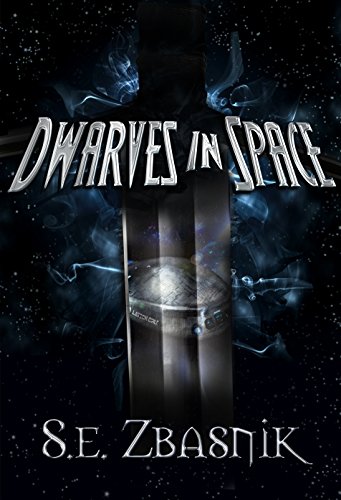
"Dwarves in Space" by S. E. Zbasnik
Dwarves in Space by S.E. Zbasnik is the kind of book that
can suit any mood you are in. It tells the tale of the spaceship Elation-Cru
and its motley crew of misfits that cobble together friendship, and the ship
itself. Captained by a human who loses the battle at keeping her past life a
secret, they must put aside their differences and prejudices and work together
to survive the hostile galaxy.
I have to say, Zbasnik created an amazing world. She used
elements of science fiction, wild west and comedy to create something totally
unique. This had the right balance of humor, action and romance that can suit
any taste, and it certainly suited mine. The characters are well developed,
revealing just enough of their backstories to make you understand them, without
giving so much away that they lose their intrigue. The plot stays fresh, making
just enough twists and turns to keep you guessing, but not so many that you
lose your way. Very few books can keep me on the edge of my seat, but the
ending of this one had me so close to the edge I fell out of my seat, rolled
across the floor and straight out of the door.
The only problem I had with this book (sometimes a big one,
sometimes small) was Zbasniks’ habit of trying to pack too much detail into
each sentence. Don’t get me wrong, the world she created is amazing, as are the
characters, and I can understand the desire to enrich the story with details,
to paint the scene of each moment as vividly as possible so the reader clearly
understands your vision, but sometimes less is more and I hope for her next
book Zbasnik feels more comfortable in her writing.
Despite a bit of a confused and rocky start, I
loved this book and can’t recommend it more. In fact, the world and the
characters are so amazing I would love to see this on the big screen, and if
producers don’t jump on this its their loss.
| A drawing of the character Taliesin |
For more about the author click here
For the authors Facebook click here
For the books website click here
For the authors Facebook click here
For the books website click here
To buy it through Amazon click here
Friday, 5 August 2016
Movie review: When Calls the Heart
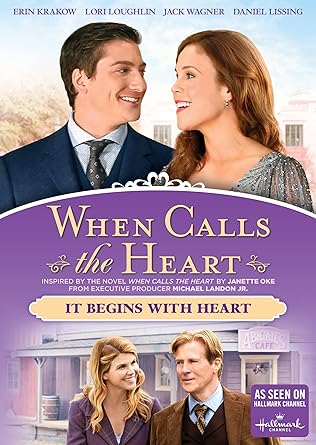
Okay, so this is obviously a first for me. I normally wouldn't have reviewed a movie but I was given the opportunity so I thought "hey, why not?"
When Calls the Heart is a Hallmark tv series, but I was given one of the movies to review. It's set in a small Canadian frontier town (I had to look up the date it's set, and it looks to be around 1910). The series is inspired by a novel series written by Janette Oke.
First of all, Hallmark movies are cheesy, but they're faithful in making you smile. When Calls the Heart is no different. Is the script profound? No. But it's sweet, and simple, and you don't regret sitting down to watch it. I definitely felt a bit out of the loop, though. I've never watched the tv series, and this movie takes place at the beginning of season 3 (the rest of When Calls the Heart Season 3 DVDs are also available). I was able to pick up enough throughout the movie, but I know I missed quite a few of the subtleties within the dialogue and even the side glances. Someone who has watched and enjoyed the tv series will definitely appreciate this movie much more than I could at this point.
One thing that kept bothering me was the landscape in the movie. Don't get me wrong: it was beautiful. But this is set in late December...in Canada. I did more digging and found it's set in a fictional town in British Columbia. And there's no snow. Okay, I know...here in Ontario we had a green December and part of January. But I'm a bit of a nut when it comes to being as close to historically accurate as possible. Yeah, it was in the negatives in December of 1910 (and for the next few years). They definitely either would have had snow, or would look much colder than anyone in the movie did. That bothered me the entire way through.
BUT! In general, I thought this was a sweet movie, and definitely makes me wish I had heard of this series earlier. I'm sure if I had been more involved with the characters before this I would have overlooked the lack of snow. I thought it was lovely to see a depiction of Canadian frontier life, the pride of their town, and the hardships that come with being on the frontier. It wasn't easy back then, especially if you had to leave your family to start a new way of life.
So you don't end up watching the movie the way I did, you can find When Calls the Heart series on DVD.
Wednesday, 20 July 2016
Book review: Two are Better - Midlife Newlyweds Bicycle Coast to Coast by Tim & Debbie Bishop

As most of you know, I don't typically review non-fiction but something about this one stood out to me. Not only did it sound exciting and adventurous, how could I turn down a paperback copy with photos from the trip!
Tim and Debbie tell their love story in this wonderful book, showing how their faith in God allowed them to stay (mostly) patient in waiting for their spouse. It really is a great story, and it really shows how trusting in God and His promises can help you through anything. The two decide to take an extended honeymoon and cycle across the United States. That sounds daunting enough to me, and I'm in my late 20s! I absolutely love the reality the newlyweds share in their travel book/journal. They shared their fights, and their laughter, which is something often missing. There's no way a couple can go without fighting at least a little. It's all about how it's done, and in the end (as was said before) they relied on the fact that God had brought the two together and that would strengthen them as a couple. They used their own personal strengths and determination to continue going, even when the body was crying for rest. They understood that each of them were half of one person, stronger as one than two, because two truly are better.
Wednesday, 6 July 2016
Book Review: But Thomas Aiken is Dead by Alex McKechnie

For the first time in a while, I found a book I couldn't put down...and I only got part 1 of 3! What a tease. This novel is written in the style of letters and an interrogation transcription. One is set in presumably present day. The other set in the distant future. The details and explanations given about the future were so natural and intriguing, I have to give the McKechnie credit. It was so well done and left me wanting more.
At first I didn't see how Thomas' writings had anything to do with Atia in the future, but it slowly appeared and we recognize the start of the development into Atia's present, our distant future, through the missing character of Fran. I can see how that transition intrigued Atia, as it intrigued me.
Something that stood out is how, with both Thomas and Atia, their words and discussions with their children deeply affected who they grew up to be and how they act. Thomas claimed that no one ever died. So Fern, his missing daughter, goes to see if that can be made possible. Presumably. We haven't found out yet, but we have a pretty good idea. (That's another thing! McKechnie didn't give me all the information, but I didn't feel the need for it. Of course, I want it. But I'm fine going along for the ride, and if you've read any of my other reviews, you know that's not often the case with me.) Atia went the opposite way, trying to show the benefits of ningen life, but the other half of her infant's...DNA?...leaned toward merging with all life forces. Prolonging life.
The rest of the novel has been added to my "must read now!!" list. It was a great read, with superb writing (only a few blips here and there) and a fascinating story. There's so much more I could say about this novel, about how it made me think about humanity, our sense of community and the global village, how the fear of death and even loneliness can presumably spur technological advances and research....but I won't. Even though I only touched the surface of the themes McKechnie wrote about. I highly recommend this novel, to basically anyone who enjoys reading.
Tuesday, 21 June 2016
Book review: Infringement by Benjamin Westbrook

Infringement by Benjamin Westbrook follows Declan, a special agent who finds himself in the midst of corruption and a divine plan designed at the foundation of the universe.
This isn't the first time I've read a novel depicting the end times, or the beginning of the end as this seems to be. What was different (for me at least, although I'm sure other novels have this as well) was that it played off the fears of most Americans now. The fear of "big brother" and how that will lead into the end times. How the government is corrupt and bringing in the Antichrist. It felt more like reading a conspiracy theory than a novel giving its take on the end times. I admit that I likely am not the right audience for this plot, but I'm nervous that there is an audience who actually believes that the ends times begins this way. "Oh no, our debit and credit cards have a chip! It's the mark of the beast!" I've literally heard that multiple times at my church. They refuse to use those cards.
The novel also felt quite dragged out. It could have been condensed quite a bit, especially as this is the beginning of a series. I'm hoping that all of the extra scenes and back stories will be important, but unfortunately reading this novel didn't compel me to complete the series.
The characters were okay. I found the relationship between Declan and Megan forced and rushed. I get that they had a history just before the book began, but it seemed too forced, as though the author needed a romantic thread and threw that together. I did like the way Declan came to Christ, however. I felt that it was very relatable, and is usually the story of most people: grew up being taught about God, something bad happens so they fall away, but then are re-introduced to Scripture and make their way back to Him. It's not a bad story at all, while predictable it's comfortable and as I said, many people have gone through that or are in some stage of it.
Overall, the novel plays into current events which can make it relatable to most readers. Even the God aspects of it weren't pushy and I think even non-Christians may enjoy it. But if they read it I'm afraid they'll think, from Evan and his mom's example, that all Christians subscribe to conspiracy theories. It's a hard thing to do, walking that line of prophecy and conspiracy, but I have to commend Westbrook on his attempt.
Wednesday, 8 June 2016
Author Interview - Andrew Joyce
Can
you tell us a little bit about yourself?
My name is Andrew
Joyce, and I live on a boat in Fort Lauderdale, Florida with my dog, Danny. I left
high school at seventeen to hitchhike throughout the US, Canada, and Mexico for
a number of years. I’ve written four books, including my latest, Resolution, and a collection of one
hundred and forty short stories comprised of my hitching adventures called Bedtime Stories for Grown-ups (as yet
unpublished).
What
do you do when you're not writing?
I read books.
Steinbeck, London, Baldacci, and Child are among my favorite authors.
When
did your first start writing?
One morning, about six years ago, I went crazy. I got out of bed, went
downstairs, and threw my TV out the window. Then I sat down at the computer and
wrote my first short story. It was soon published in a print magazine (remember
them?). I’ve been writing ever since.
What
inspired you to write this particular book?
I was not inspired to write Resolution
. . . I was cajoled into writing it.
This is the backstory to Resolution:
My first book
was a 164,000-word historical novel. And in the publishing world, anything over
80,000 words for a first-time author is heresy. Or so I was told time and time
again when I approached an agent for representation. After two years of
research and writing, and a year of trying to secure the services of an agent,
I got angry. To be told that my efforts were meaningless was somewhat
demoralizing to say the least. I mean, those rejections were coming from people
who had never even read my book.
“So you
want an 80,000-word novel?” I said to no one in particular, unless you
count my dog, because he was the only one around at the time. Consequently, I
decided to show them City Slickers that
I could write an 80,000-word novel!
I had just
finished reading Mark Twain’s Huckleberry Finn for the third time, and I
started thinking about what ever happened to those boys, Tom and Huck. They
must have grown up, but then what? So I sat down at my computer and banged out REDEMPTION: The Further Adventures of Huck Finn and Tom
Sawyer in two months, then sent out
query letters to agents.
Less than a
month later, the chairman of one of the biggest agencies in New York City
emailed me that he loved the story. We signed a contract and it was off to the
races, or so I thought. But then the real fun began: the serious editing. Seven
months later, I gave birth to Huck and Tom as adults in the Old West. And just
for the record, the final word count is 79,914. The book went on to reach #1 status in its category on
Amazon—twice. And it won the Editors’ Choice Award for best Western of 2013.
The rest, as they say, is history.
But not quite.
My agent then
wanted me to write a sequel, but I had other plans. I was in the middle of
editing down my first novel (that had been rejected by 1,876,324 agents . . .
or so it seemed) from 164,000 words to the present 142,000. However, he was
insistent about a sequel, so I started to think about it. Now, one thing you
have to understand is that I tied up all the loose ends at the end of REDEMPTION, so there was no way that I
could write a sequel. And that is when Molly asked me to tell her story. Molly was a minor character
that we met briefly in the first chapter of REDEMPTION,
and then she is not heard from again.
So I started
to think about what ever happened to her. After a bit of time—and 100,000
words—we find out what did happen to Molly. It is an adventure tale where Huck Finn weaves through the periphery of a story
driven by a feisty female lead. Molly Lee was my second book,
which achieved #2 status on Amazon.
Now I was finished with Huck Finn for good. Now I could go back to my
first novel and resume the editing process.
But not quite.
It was then that Huck and Molly ganged up on me and demanded that I
resolve their lives once and for all. It seems that I had left them hanging—so
to speak. Hence, RESOLUTION: Huck
Finn’s Greatest Adventure.
The three books are standalones and are not part of a series. They can
be read in any order. RESOLUTION is
available as an eBook and in print.
There you have it. Perhaps now Huck and Molly will leave me alone long
enough so that I can get some editing done on my first novel.
What
was your favorite chapter (or part) to write and why?
That is a very
good question. It’s also a hard question to answer, but I reckon the passage
below should suffice as one of my favorites. As to why, I would have to say
because it defines what I was trying to convey in the novel—the struggle of my
protagonist with nefarious men, nature, and wild animals to name just a few of
his adversaries.
• • • •
•
The alpha wonders
why the two-legs have now bunched together. No matter, they will watch, they will be
ready, and when the time is right, they will feed on the meat from their bones.
It is time to move
closer to the two-legs, though it is not yet time for the attack. They must be
cautious. He remembers—from long ago—the sticks the two-legs use to kill. His
mother was killed by one. The sticks bark loudly and blood spouts from a wolf-brother
or a wolf-sister, then they are no more. He will keep his family safe. They
will not strike until the two-legs are struggling in the snow or separated from
one another, making themselves easy for the kill.
No matter the
wolves’ hunger, they will wait . . . it is their way.
The two-legs have
their ways and the wolves have theirs. Before very long, they will tear at the
flesh of the two-legs; their warm blood will drip from the wolves’ jaws—before
very long, their hunger will have fled their wolf-bodies and they will lie in
the snow with full bellies.
• • • • •
Huck
went back to the fire, bringing Bright with him, and sat down on his heels.
With one hand, he held onto his Winchester, the stock resting in the snow, the
barrel pointing to the sky. With the other, he held onto Bright’s collar. He
did not want the dog to start anything that he could not finish. He did not say
anything. He was thinking. Jass stopped stirring the mush and Molly looked up
from what she was doing. They looked at each other, then back at Huck.
Molly
asked, “Did you change your mind about hunting?”
Slowly,
Huck came out of his reverie and looked at Molly and then at Jass. Turning back
to Molly, he said, “Get John fed and get ready to move out.” To Jass, he said,
“Hurry up with that mush. We gotta be going.”
“What’s
the matter, Huck?” asked Jass.
“We
have company. There are four or five wolves up there, back on the rise, that
seem to have an extraordinary interest in us. Don’t worry, we’ll be all right.
We just have to keep moving, but from now on, we stay together. If they don’t
follow us, we’ll be fine.”
Both
Molly and Jass looked up to the rise and saw nothing. “I don’t see any wolves,”
said Molly.
“Me
either,” interjected Jass.
Huck
hurriedly stood up and turned to where they were looking. They were right, the
wolves were gone. He was about to sigh in relief when Bright growled again and
he saw a dark speck moving in the snow, then another, and another. The wolves
had come down off the rise and were coming their way.
“Feed
John,” ordered Huck. “It may be a while before we can stop again.” He did not
have to explain. Molly and Jass had also seen the wolves.
• • • • •
They move to
within a hundred yards of the two-legs and spread out in a half circle. If they
had been a larger family, they would have completely surrounded their prey. Now
is the time to observe their weaknesses and look for opportunities to mount an
attack.
The pup knows his
place, but being young, he wants to show off some. He’s behind the adults,
running back and forth, when all of a sudden he darts past the line the adults
have set. He’ll show them what a great hunter he is. As he runs past one of the
females, she turns and nips him on his right haunch. He yelps, and with a
painful whine, runs back to where he should have been. It was his mother who
had put an end to his foolishness. The alpha male observes the interplay
between mother and pup and remembers back to when he was a pup and his mother
had kept him in line in a similar manner. But that was before she was killed by
the two-legs.
What
is best writing advice you can give?
Read, read . . . and then read some more. Read everything you can get
your hands on! Reading to a writer is as medical school is to a doctor, as
physical training is to an athlete, as breathing is to life. When one reads
stuff like the passage below, one cannot help but become a better writer.
"The afternoon came down as imperceptibly as
age comes to a happy man. A little gold entered into the sunlight. The bay
became bluer and dimpled with shore-wind ripples. Those lonely fishermen who
believe that the fish bite at high tide left their rocks and their places were
taken by others, who were convinced that the fish bite at low tide.”—John Steinbeck, Tortilla Flat
Is
there anything else you'd like your readers to know about the book?
I would like to
say that I wrote Resolution in one
sitting and everything in it is my
pure genius. But that would be a lie. I have an editor that puts order to my
chaos.
One last thing:
Everything in Resolution is historically correct. I spend as much
time on research as I do writing—sometimes more.
Is
there anything else you’d like to say?
Just this: Thank
you for having me over. It’s been a real pleasure.
You can find Andrew Joyces' Latest novel, "Resolution; Huck Finn's Greatest Adventure." here:
https://www.amazon.com/Resolution-Huck-Finns-Greatest-Adventure-ebook/dp/B01E83YVJA
https://www.smashwords.com/books/view/629497
http://www.barnesandnoble.com/w/resolution-andrew-joyce/1123675041?ean=2940152976083
https://www.goodreads.com/book/show/30009309-resolution
and his website:
http://andrewjoyce76.com/
Subscribe to:
Posts (Atom)